Hull Materials Aluminium Plates 5083 H116: A Comprehensive Guide
In modern marine engineering, hull integrity, Resistencia ar corrosión, and fabrication practicality are non-negotiable. Aluminum hull materials, particularly 5083 alloy in H116 temper, have become a default choice for many ships, lifeboats, barges, and offshore structures.
This guide unpacks the characteristics, processing considerations, applications, and supplier landscape around hull materials aluminium plates 5083 H116.
Along the way, you’ll find practical comparisons, data-driven insights, and actionable guidance to help engineers, buyers, and fabricators make informed decisions.
This article also offers an introduction to Huawei Aluminum, a prominent supplier in the aluminum plate space, highlighting why they are a relevant option for 5083 H116 hull plates and how their capabilities align with shipbuilding and marine applications.
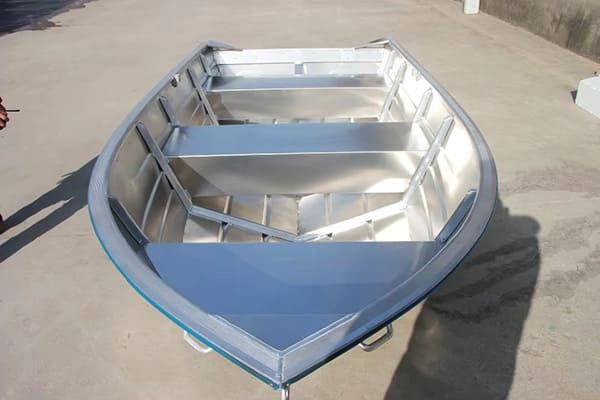
Hull Materials Aluminium Plates 5083 H116
A concise overview of 5083 H116 for hull plates
Te ra es 5083 Aluminio?
Aleación 5083 aluminio belongs to the 5xxx series of aluminum alloys, a family renowned for excellent corrosion resistance in marine environments, good weldability, and high strength for non-heat-treatable alloys.
The primary alloying element is magnesium, with manganese contributing to solid solution strengthening and grain structure refinement.
Key attributes that make 5083 a hull-friendly alloy include:
– Superior corrosion resistance in seawater compared to many other aluminum alloys.
– Non-heat-treatable: strength comes from work hardening and stable tempering rather than precipitation hardening.
– Excellent weldability with common filler metals such as ER5356 and ER5083.
– Good formability for typical plate fabrications and assembly.
What does H116 temper mean?
H116 is a temper designation that indicates the material has been strain-hardened (and then stabilized) through controlled work hardening and partial annealing. In practice:
– H116 is a stable, partially strain-hardened condition, designed to retain a high level of strength while offering adequate ductility for fabrication.
– This temper is well-suited for hull plates where a combination of strength and formability is required, particularly in thicker plates that must be welded and joined on the ship’s hull.
– H116 plates typically exhibit higher yield and tensile strength than annealed or lightly worked tempers, while maintaining good corrosion resistance.
In marine design, H116 plates are favored for structural members, shell plating, and other components where service life in seawater, splash zones, and high humidity is critical.
Why is 5083 H116 popular for hulls?
- Resistencia ar corrosión: The magnesium content in 5083 forms a protective surface film in seawater, reducing corrosion rates and prolonging service life.
- Soldabilidad: Welding 5083 H116 is straightforward with common filler metals, minimizing post-weld heat treatment requirements in many cases.
- Strength-to-Weight: While not as strong as heat-treatable aerospace alloys, 5083 H116 offers a favorable strength-to-weight ratio, critical for fuel efficiency and payload capacity in vessels.
- Diamond-shaped Application Fit: It covers hull plate, deck plates, internal frames, marine components, and even offshore structures where weight reduction matters but corrosion durability is essential.
where 5083 H116 sits in the spectrum of hull materials
Quick reference — hull-friendly aluminum alloys
– Aleación: 5083
– Atemperar: H116
– Key strength: High ductility with stable, high strength due to work hardening
– Resistencia ar corrosión: Excellent in seawater
– Soldabilidad: Excellent with common filler metals
– Aplicaciones: Ship hulls, Cubiertas, pressure hulls, Estructuras offshore, and general marine components
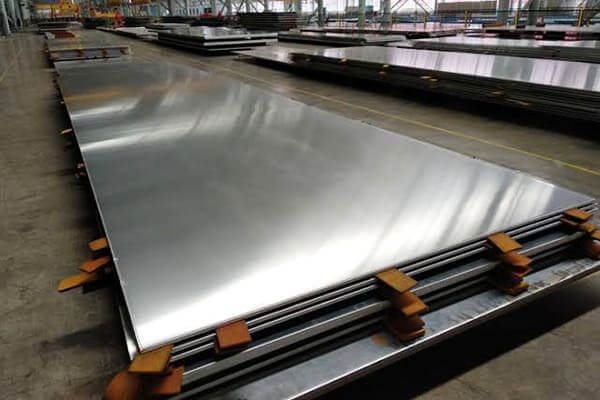
Huawei 5083 H116 Aluminium Plates
Physical and mechanical properties of 5083 H116
Mechanical properties
Because alloys and tempers vary by production lot, espesor, and processing, suppliers commonly report ranges rather than single fixed numbers.
The following ranges reflect typical values for 5083-H116 in common plate thicknesses (hne ej., 5–40 mm).
Real-world values depend on thickness, processing route, and quality control during extrusion and rolling.
- Yield strength (0.2% offset): approximately 210–260 MPa
- Ultimate tensile strength (UTS): approximately 320–360 MPa
- Elongation at break: roughly 10–20% depending on thickness and processing
- Hardness (Vickers): generally in the moderate to high range for non-heat-treatable alloys
These ranges position 5083-H116 as a robust hull plate option, offering reliable performance in structural and shell components where marine exposure is a constant concern.
Density and thermal properties
- Densidad: about 2.66 g/cm³
- Melting point: approximately 607°C (high enough to withstand typical marine fabrication, though service temperatures are well below this)
- Thermal conductivity: moderate for aluminum alloys in the 5xxx family, contributing to reasonable heat dissipation in deck and hull components
- Coefficient of thermal expansion: roughly 23–24 x 10^-6 /°C, which aligns well with typical marine assemblies and avoids extreme differential expansion in welded structures
Microstructure, corrosion behavior, and wear resistance
- Microstructure: 5083 is a solid-solution strengthened alloy. The microstructure, when in H116 temper, features elongated grains and a stable dislocation density achieved through strain hardening and partial annealing.
- Corrosion behavior: Exceptional corrosion resistance in seawater due to the protective surface oxide and the inherent alloy composition. This resistance is superior to many non-heat-treatable alloys and significantly better than generic structural aluminum grades.
- Wear and galling: Moderate wear resistance; for highly abrasive service or salt spray zones, applying appropriate protective coatings or sacrificial linings can extend service life.
Mechanical and physical properties
| Ha̲i | Typical Range |
|---|---|
| Límite elástico (Mpa) | 210–260 |
| Máxima resistencia ja ar tracción (UTS) (Mpa) | 320–360 |
| Alargamiento (%) | 10–20 |
| Densidad (g/cm³) | 2.66 |
| Melting Point (°C) | 607 |
| Hardness (HV) | Hingi ze̲di (dependent on thickness and work hardening) |
Corrosion performance in marine environments
Numerous marine applications rely on 5083-H116 because it maintains integrity in saltwater with low galvanic susceptibility when attached properly to other shipboard materials. Its corrosion resistance is augmented by:
– An intact protective oxide layer that forms naturally in atmospheric and aqueous environments
– Compatibility with common marine coatings, facilitating long-term protection
– Compatibility with welded joints that do not require aggressive post-weld heat treatments
Practical takeaway: In hulls exposed to seawater spray and spray zones, 5083 H116 reduces maintenance frequency relative to many alternative alloys, provided fabrication and coating are properly managed.
Manufacturing processes and fabrication considerations for hull plates
Plate production and tempering routes
Hull plates like 5083 H116 are typically produced via hot rolling followed by cold rolling, with final tempering to achieve the H116 state. The process path typically includes:
– Homogenization (to reduce internal segregation and improve plate uniformity)
– Hot rolling to target thickness
– Cold rolling for dimensional accuracy and surface finish
– Annealing and strain hardening to achieve H116
– Surface finishing (kasai or bright finish, depending on customer requirements)
Manufacturing controls are essential to maintain plate flatness, thickness tolerance, and surface finish, all of which influence fit-up during hull assembly.
Typical plate thicknesses and sizes for hull applications
Hull plates are produced in a range of thicknesses to accommodate structural requirements and vessel class. Common sizes include:
– Espesor: 5–40 mm (with specialized orders beyond this range)
– Ancho: 1,000–2,500 mm (and wider in some mills, depending on rolling capacity)
– Largura: up to 12,000–16,000 mm (longer plates available via multiple plate splicing or dedicated long-plate orders)
These ranges can vary by supplier and mill capabilities, so buyers should engage with the supplier to confirm feasible sizes for a given project.
Welding and fabrication considerations
Welding 5083-H116 is broadly straightforward, but certain best practices improve outcomes:
– Filler metal: Common choices are ER5083 and ER5356, with ER5183 and ER5556 as alternatives for specific joint configurations.
– Pre-welding prep: Cleanliness is critical; remove oils, oxides, and any contamination at weld joints.
– Joint design: For thicker plates, use double-sided welds or mechanical fastening in conjunction with welding to control distortion.
– Post-weld treatment: Ko xingu ar casos, a light post-weld stress-relief heat treatment is not required, but verify with design specifications; in high-thaumic environments, protective coatings may be warranted.
– Corrosion protection: Apply marine coatings, epoxy primers, or sacrificial anodes where galvanic corrosion could occur.
Common welding considerations for 5083-H116 hull plates
– Factor | Guidance
– Filler metal | ER5083 or ER5356
– Pre-weld cleaning | Essential: remove oils and oxides
– Heat input | Hingi ze̲di; avoid overheating to minimize loss of ductility
– Post-weld treatment | Not always required; verify with design requirements
– Coatings | Recommend marine-grade coatings in splash zones
Fabrication tips for hull plate assemblies
– Tip | Rationale
– Use clamping fixtures | Reduces distortion during welding
– Double-willet joints for thick plates | Improves gap tolerance and weld quality
– Pre-bend components before assembly | Minimizes springback and improves fit
– Inspect welds with non-destructive testing | Ensures structural integrity
Surface finishing and coatings
For hull structures, surface finishing improves durability and aesthetics:
– Anodizing is limited for 5083 because of its chemical compositions and mechanical properties; instead, apply high-performance marine coatings.
– Paint systems: epoxy-based marine paints with anti-corrosive properties are common.
– Protective films and abrasion-resistant coatings may be used in areas with heavy contact or abrasion (hne ej., bow sections, deck edges).
Coatings must be compatible with aluminum to avoid galvanic corrosion at coating-detachment zones. Surface preparation quality strongly influences coating life.
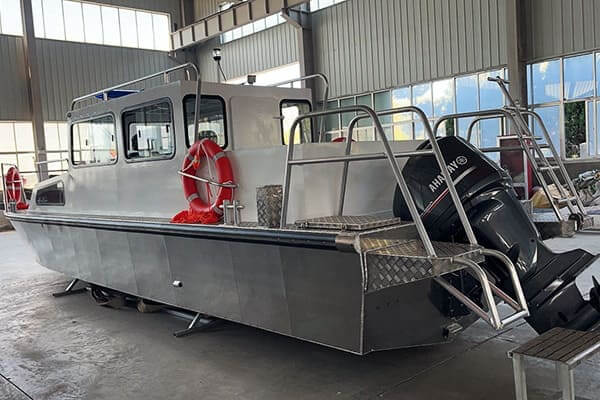
5083 H116 Aluminium Plates for Shipbuilding
Applications and design considerations for 5083 H116 hull plates
Naval hulls and commercial marine vessels
5083 H116 is a staple for ship hull plates in both military and civilian vessels where corrosion resistance and weldability are critical. Typical roles include:
– Shell plating for hulls
– Deck and hatch covers
– Internal frames and bulkhead panels requiring weight savings
– Offshore support vessels and crew boats operating in seawater
Offshore structures and other marine environments
Beyond ships, 5083 H116 plates are used in offshore platforms, buoyant structures, and floating production storage and offloading (FPSO) components.
In these contexts, Resistencia ar corrosión, fatigue performance, and ease of fabrication are paramount.
Design considerations and life-cycle performance
When designing with Hull Materials Aluminium Plates 5083 H116, engineers should consider:
– Corrosion exposure levels: severe marine environments demand robust coatings and possibly additional corrosion protection measures.
– Structural load paths: plate thickness and temper should be chosen to meet bending, torsion, and impact resistance requirements.
– Weld integrity: proper joint design and control of residual stresses help maintain hull integrity over the service life.
– Replacement and maintenance: plate replacement strategies and preventive maintenance routines should be planned, with attention to corrosion-prone zones.
Hull Materials Aluminium Plates 5083 H116 VS Others
5083 H116 versus 5083 H32 and other tempers
- 5083 H32 is a common hull plate temper where the material is stable but has lower yield strength than H116 due to reduced work hardening. H32 plates are easier to form but offer less structural resistance in thick-walled hull areas.
- H116 provides higher strength through more work hardening, making it preferable for thicker plates and heavier structures, where maintaining stiffness and resistance to deformation is crucial.
- Both H116 and H32 retain excellent corrosion resistance; H116 has the advantage of greater strength, which can translate to wall thickness reductions for equivalent load-bearing performance, potentially offsetting material cost.
5083 H116 versus 5086 and other 5xxx alloys
- 5086 is another marine-grade 5xxx alloy with high corrosion resistance and good strength, especially in thicker sections. It typically has higher corrosion resistance than 5083 in certain saltwater conditions due to its higher magnesium content and tighter grain structures, but its weldability can be slightly more challenging in very thick sections.
- 5083 generally exhibits superior formability and machinability for complex hull shapes and stiffeners, particularly in plate form, while offering cost advantages in some thickness ranges.
- In thicker hull components, 5086 might be preferred for corrosion protection in extreme marine environments, pe 5083 remains widely used due to its balance of properties and cost.
5083 H116 versus non-5xxx alloys (hne ej., 6061, 2024)
- 6061-T6 and 2024-T3 (and related tempers) are heat-treatable alloys offering higher yield strengths and stiffness in some applications, but their corrosion resistance in seawater is typically inferior to 5xxx alloys.
- For hull plates exposed to seawater, 5083 H116 generally outperforms 6061 y 2024 in corrosion resistance, and it offers better weldability and formability in plate form.
- The choice between 5xxx alloys and other alloys depends on seawater exposure, required strength-to-weight, welding requirements, and cost.
Quick alloy comparison for hull plates
| Aleación | Atemperar | Resistencia ar corrosión | Soldabilidad | Typical Use |
|---|---|---|---|---|
| 5083 | H116 | Excelente | Excelente | Hull plates, deck plates, Estructuras offshore |
| 5083 | H32 | Excelente | Excelente | Lightweight hull components requiring improved formability |
| 5086 | H116 | Excelente | Very Good | Severe seawater exposure, thicker hull sections |
| 6061 | T6 | Hingi ze̲di | Hingi ze̲di | Non-marine structural components; not the first choice for seawater exposure |
| 2024 | T3 | Hingi ze̲di | Xi hño | Aircraft and general aerospace applications; not intended for seawater hulls |
Cost and availability considerations
- Material price for 5083 H116 is typically higher than simpler non-heat-treatable alloys due to alloy composition and tempering complexity. 'Ñotho ar embargo, the improved corrosion resistance and weldability often yield lifecycle cost savings in marine environments.
- Availability hinges on global supply chains and rolling mill capacities. Widely used alloys like 5083 are generally readily available, but exact plate sizes, thicknesses, and tolerances can influence lead times.
- Premiums for specific plate finishes, anti-corrosion coatings, or bespoke dimensions should be accounted for in project budgets.
Supplier landscape: Huawei Aluminum as a credible source for 5083 H116 hull plates
About Huawei Aluminum
Huawei Aluminum Co., Ltd. is a major player in the Chinese aluminum industry, known for producing a broad range of aluminum products, including plates, sabanas, and extruded profiles. The company emphasizes:
– Strong supply reliability for marine-grade aluminum alloys, Incluido 5083 y 5086 in various tempers
– Capability to deliver large plate sizes, close-tolerance thicknesses, and consistent quality
– Comprehensive quality systems and certifications aligned with international standards
– A global sales network that supports technical consultation, customization, and after-sales service
Huawei Aluminum’s hull plate offerings frequently align with marine engineering and shipbuilding buyers seeking stable supply, predictable quality, and competitive pricing.
Why Huawei Aluminum for hull plates?
- Proven supply chain experience in the marine sector, with a track record of delivering large plate orders to shipyards and marine equipment manufacturers.
- Ability to offer Hull Materials Aluminium Plates 5083 H116 in thicknesses and dimensions suitable for hull fabrication, with consistent mechanical properties across production lots.
- Emphasis on quality assurance, documentation, and compliance with industry standards, enabling smoother approval processes with classification societies and flag authorities.
Certifications, standards, and quality assurance
- Certifications: ISO 9001 quality management, y, where applicable, third-party verification (ABS, DNV-GL, LRS, etc.) for marine components
- Material standards: ASTM B209 (for aluminum and aluminum-alloy plates, sabanas, and coils), EN 485 (generic standards for wrought aluminum and aluminum alloys), and other region-specific standards depending on market
- Non-destructive testing: UT (ultrasonic testing), RT (radiographic testing), and other NDT methods as per project or customer requirements
- Traceability: batch-level traceability, lot testing, and conformity documentation to facilitate project acceptance by yards and classification societies
By selecting Huawei Aluminum, customers may benefit from established process controls, consistent supply, and local support for project-specific needs such as heat treatment compatibility, surface finish options, and compliance documentation.
Quality assurance and testing: ensuring reliability in marine hull plates
Standards and testing frameworks
- ASTM B209: Standard specification for aluminum and aluminum-alloy plates, sábana, and plate-sheets
- EN 485-1/2: Wrought aluminum and aluminum alloy sheet and plate — General requirements
- Classification society rules: ABS, DNV-GL, LR, and others often require material certifications, mechanical property verification, and traceability
- Chemical composition: verified to ensure magnesium content (critical for corrosion resistance) and other alloying elements remain within specification
- Mechanical tests: tensile tests, hardness tests, y, Jar 'ra ya casos, bend tests to confirm ductility and formability
- Surface quality: inspection for surface defects, waviness, and thickness tolerances
Non-destructive testing and inspection
- Ultrasonic testing (UT) for thickness uniformity and internal defects
- Radiographic testing (RT) for weld quality and plate integrity in critical zones
- Visual inspection for surface quality, including porosity and surface cracks
- Coating adhesion tests, where painted or coated hull areas require robust bonding
Quality milestones for hull plate procurement
- Raw material certification: pre-purchase chemical and mechanical property documentation
- Mill test report (MTR) or chemical analysis certificate
- In-plant testing: thickness verification and flatness checks
- Final acceptance: certification documents, traceability data, and compliance with project specifications
Practical data and comparative tables
Representative properties of 5083-H116 compared to alternative hull plate options
| Ha̲i | 5083-H116 | 5083-H32 | 5086-H116 | 6061-T6 |
|---|---|---|---|---|
| Límite elástico (Mpa) | 210–260 | ~110–140 | 260–290 | ~240 |
| UTS (Mpa) | 320–360 | ~180–210 | 320–360 | ~290 |
| Alargamiento (%) | 10–20 | 15–25 | 10–20 | 12–20 |
| Marine Corrosion Resistance | Excelente | Excelente | Excelente | Hingi ze̲di |
| Soldabilidad | Excelente | Excelente | Very Good | Hingi ze̲di |
| Conformabilidad | Good to Very Good | Very Good | Hingi ze̲di | Hingi ze̲di |
| Typical Use | Hull shells, heavy hull sections | Light hulls, Cubiertas, lighter components | Offshore structures, thicker sections | General structural components (non-marine) |
Cost considerations across common hull plate alloys
| Alloy/Temper | Estimated Price Range (USD/kg) | Notes |
|---|---|---|
| 5083-H116 | $3.2–$4.2 | Market-driven; reflects corrosion resistance and work-hardening costs |
| 5083-H32 | $3.0–$4.0 | Slightly lower due to reduced hardening requirements |
| 5086-H116 | $3.4–$4.6 | Higher in some markets due to corrosion resistance |
| 6061-T6 | $2.8–$3.6 | Generally cheaper but not ideal for seawater hulls |
Hñeti: Price ranges depend on thickness, Ancho, largura, surface finish, and current market conditions. For precise quotes, contact suppliers with project specifications.
FAQs: Hull Materials Aluminium Plates 5083 H116
Q1: What makes 5083 H116 suitable for marine hulls?
– 'Nar: Its combination of high corrosion resistance in seawater, strong weldability, and a stable temper suitable for thick plates makes it well suited for hull shells, deck plates, and critical structural members. The H116 temper provides reliable strength while maintaining formability to facilitate fabrication.
Q2: How does 5083 H116 compare with 5083 H321 or H116 in terms of strength?
– 'Nar: H116 generally offers higher strength than H32 due to increased work hardening, which can translate into thinner plates for equivalent load capacity. H321 is typically less standard for hull use; your design should specify the exact temper and ensure compatibility with your fabrication processes.
Q3: Are there safety and compliance considerations for marine use?
– 'Nar: Hä. Procurement should include a full material certificate, mill test reports, and compliance with classification society rules (ABS, DNV-GL, LR, etc.) as applicable to your vessel and jurisdiction. Surface coatings, joining methods, and thickness tolerances must align with structural design requirements and marine safety standards.
Q4: What are the common thickness ranges for hull plates?
– 'Nar: Typical plate thicknesses range from 5 mm to 40 milímetro, with specialized orders available for thicker sections. Shipyards may request specific plate sizes to minimize welding and splicing.
Q5: Can Huawei Aluminum supply custom sizes for hull plates?
– 'Nar: Hä. Huawei Aluminum and similar large manufacturers can accommodate custom thicknesses, widths, and lengths, as well as surface finishes, to meet project specifications and tolerances.
Q6: What testing should be performed before installing hull plates?
– 'Nar: Material certification, mechanical property verification (tensile tests, yield strength, elongation), thickness verification, and non-destructive testing (UT or RT) for critical welds and attachment joints. Coating adhesion tests are recommended if coatings are used.
How to evaluate suppliers for 5083 H116 hull plates
When selecting a supplier for hull plates, consider the following criteria:
- Material consistency: ability to deliver uniform mechanical properties across production lots, with clear MTR documentation
- Customization capabilities: espesor, Ancho, largura, surface finish, and coating options
- Lead times and logistics: reliability for large orders, shipping routes, and regional availability
- Certification and compliance: alignment with ISO 9001, and classification society requirements
- Technical support: access to metallurgical expertise, welding recommendations, and fabrication guidance
- After-sales service: willingness to support repairs, replacements, and project documentation
Aluminio Huawei, as described, offers a credible value proposition along these dimensions, with a network that supports global distribution and project-specific requirements.
'Ñotho ar embargo, it remains essential to verify current capabilities and standards with the supplier at the time of inquiry.
Conclusion
- 5083 H116 hull plates provide a compelling mix of corrosion resistance, Soldabilidad, and strength for marine hull applications.
- Welding practices, joint design, and protective coatings are critical to maximizing life-cycle performance in seawater environments.
- A rigorous quality assurance program with appropriate testing and traceability is essential to meet classification society and customer requirements.
- Suppliers like Huawei Aluminum can offer reliable access to 5083 H116 hull plates, supported by certifications and a robust supply chain. Buyers should still validate current certifications, MTRs, lead times, and customization options before committing to an order.
- Comparative evaluation against other alloys (5083 H32, 5086 H116, 6061, 2024) will depend on project-specific factors, including corrosion exposure, required strength, plate thickness, fabrication complexity, and budget.
By approaching hull plate selection with a clear understanding of the material properties, fabrication implications, and supplier capabilities, engineers can optimize hull performance and lifecycle costs.
Ar 5083 H116 combination stands out for seawater resilience and weldable strength, continuing to be a preferred choice for many contemporary marine hulls and offshore structures.
If you’re evaluating 5083 H116 hull plates today, consider engaging with Huawei Aluminum for an initial consultation, a material property confirmation, and a quotation aligned with your vessel’s design specifications, production schedule, and quality assurance requirements.
Their experience in marine-grade plate production and their network of technical support can help accelerate decision-making and ensure your hull plates meet the precise demands of your project.
Share with PDF: Download



Contesta