Nthuts'i ñut'i
The beverage packaging industry constantly seeks materials that combine formability, Resistencia ar corrosión, lightness, and compatibility with linings and coatings.
In the realm of vodka closures, the demand for reliable, cost-effective, and visually appealing caps pushes aluminum sheet grades toward alloys that can be drawn into cap shapes, resist ethanol exposure, and cooperate with inner linings to preserve flavor and aroma.
Among the alloys most frequently considered for vodka caps is 3105 aluminio, an Mn-containing alloy celebrated for its excellent formability and robust corrosion resistance.
When shaped into sheet stock suitable for cap production, 3105 provides a compelling mix of properties that can enhance line efficiency, reduce scrap, and help deliver consistent closure performance.
This extensive guide investigates the 3105 Aluminum Sheet for Vodka Caps from multiple angles. It explains why 3105 is well suited to cap forming, compares it with similar alloys, examines manufacturing and finishing processes, and discusses the supplier landscape with a focus on Huawei Aluminum—a recognized player in the aluminum sheet market.
The content blends technical detail, practical manufacturing guidance, supply-chain considerations, and actionable advice for brand owners, cap manufacturers, and billet-to-sheet suppliers working in the vodka cap sector.
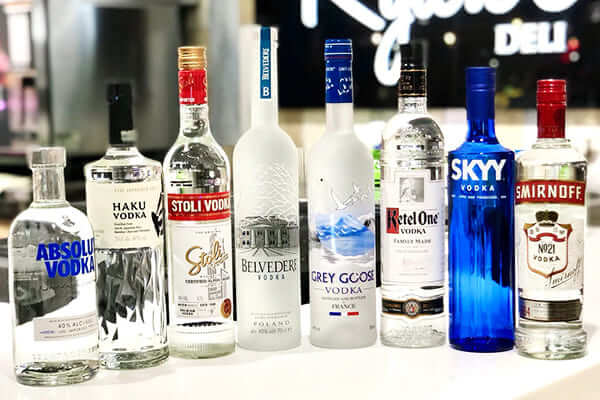
3105 Aluminum Sheet for Vodka Caps
What makes vodka caps a specialized application for aluminum sheet?
Vodka closures are a specialized application in metal packaging for several reasons:
- Formability and Drawability: Cap components often require deep drawing, ironing, and careful control of drawing-induced thinning. The sheet must yield predictably under drawing loads without cracking, wrinkling, or thinning through critical regions.
- Liner and Coating Compatibility: Caps rely on inner liners or coatings to provide food-contact safety, liquid-tight seals, and odor control. The chosen aluminum sheet must tolerate liners, coatings, and potential heat-sealing processes without degrading.
- Corrosion and Chemical Resistance: Beverages, including vodka, are highly sensitive to impurities and corrosion products that could influence taste or safety. Aluminum alloys used for caps must offer robust corrosion resistance in contact with ethanol-based liquids and cleaning agents.
- Dimensional Stability: Caps experience thermal and mechanical stresses during capping, shipping, and storage. Dimensional stability reduces the need for rework and ensures consistent closures across batches.
- Aesthetic and Branding: Caps serve as visible branding elements. The sheet must support cosmetic finishes such as lacquer, printed graphics, or color coatings while maintaining balance between appearance and barrier properties.
- Food-Contact Compliance: Caps are part of the closure system for beverages, and the materials involved in the cap (sábana, liner, adhesive, and coatings) need to conform to applicable food-contact regulations and standards. This reduces risk for manufacturers and ensures market access.
3105 aluminum sheet is well-positioned to meet these demands because of its combination of formability, strength relative to thickness, ne resistencia ar corrosión.
Below, we explore its properties in depth and compare with other alloys commonly considered for vodka caps.
Acerca ar 3105 Aleación aluminio
Chemical composition and general characteristics
3105 aluminio is an aluminum-manganese (Al-Mn) alloy primarily designed for improved formability and corrosion resistance. Its composition typically includes:
- Aluminio (Ya ar) balance
- Manganeso (Mn): approximately 1.0–1.5%
- Minor elements such as silicon (Hää), iron (Nt'eme), magnesio (Mg), cobre (Cu), zinc (Zn), and others within tight limits
Key characteristics:
- Hño conformabilidad: Excellent workability in drawing, ironing, and forming operations essential for cap production.
- Resistencia ar corrosión: Aluminum naturally forms a protective oxide layer; the Mn addition enhances stability and resistance to corrosion in many environments, including mild acidic and alcoholic conditions encountered with vodka.
- Weldability and joinability: Reasonable weldability and compatibility with joining processes used in cap component manufacturing, though caps typically rely on mechanical forming and liner application rather than welding.
- Surface finish versatility: Accepts a range of finishes, including lacquer (varnish) coatings, printed graphics, and color overlays, making it attractive for consumer-facing cap aesthetics.
Composition and temper have a pronounced effect on performance. The temper designation indicates the level of work hardening and the thermal history, which directly controls drawability, ndu nzafi, and springback.
For vodka caps, temper choices are typically those optimized for deep drawing and ironing, such as H-s (work-hardened) or annealed ranges.
Mechanical properties by temper (typical ranges)
Hñeti: Mechanical properties vary with thickness, exact composition, and processing. The following ranges illustrate typical behavior for common temper choices used in cap manufacturing.
- 3105-O (annealed):
- Yield strength, approximate: near 0 Mpa (as-annealed metal has little defined yield strength)
- Tensile strength: roughly 70–100 MPa
- Alargamiento: high, often 20% wa mäs
- Conformabilidad: excellent; easiest to draw and shape
- 3105-H18/H19 (work-hardened)
- Yield strength: typically in the range of 60–90 MPa (varies with exact temper)
- Tensile strength: approximately 90–120 MPa
- Alargamiento: reduced relative to annealed, often 5–12%
- Conformabilidad: good to very good; acceptable for deep drawing when processes are controlled
- 3105-H24 (intermediate work hardening)
- Yield strength: around 70–110 MPa
- Tensile strength: around 110–140 MPa
- Alargamiento: commonly 4–12%
- Conformabilidad: excellent for stable forming and shape retention
- 3105-H26 (higher work hardening; used in certain drawn parts)
- Yield strength: 100–130 MPa
- Tensile strength: 140–170 MPa
- Alargamiento: 3–8%
- Conformabilidad: good, but requires careful process control to avoid cracking
The exact numbers depend on thickness and processing. For vodka caps, manufacturers often choose temper and thickness to strike a balance between achieving the rigid cap shape and limiting thinning during deep drawing.
In practice, H18 or H19 equivalents with thicknesses in the range of 0.20 Pa 0.40 mm are common starting points for caps in many markets.
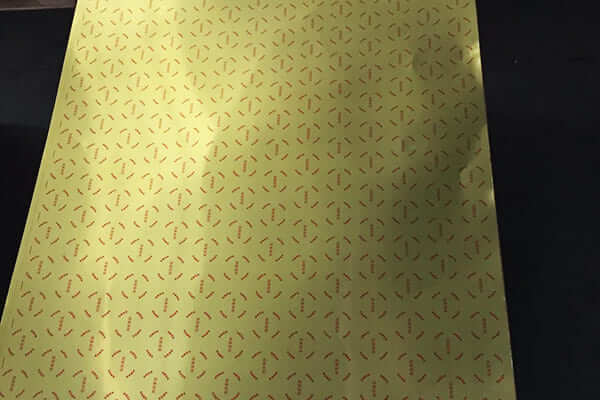
Huawei 3105 Aluminum Bottle Cap Material
Why 3105 is a strong candidate for vodka caps
- Formability advantage: 3105’s high elongation in annealed or lightly work-hardened temper makes it easier to form intricate cap shapes without failure, a critical factor in cap manufacturing where consistent draw and ironing are core steps.
- Consistent draw properties: The alloy’s consistency reduces process variance, which translates into fewer rejected caps and less rework on the line.
- Compatibility with liners and coatings: The surface finish of 3105 accepts standard varnishes and coatings used in cap production, and it tolerates heat sealing and liner adhesion processes without compromising seal integrity.
- Ethanol resistance: While all aluminum alloys rely on oxide films for corrosion resistance, 3105 demonstrates robust performance when in contact with ethanol-containing beverages, provided the liner and interior coating are properly selected for food-contact compatibility.
- Availability and cost: 3105 is widely produced in sheet form across major aluminum-producing regions, which helps ensure supply reliability and competitive pricing compared with more exotic alloys.
- Sustainability profile: Aluminum is widely recycled, y 3105 typically integrates well within recycled-content programs, contributing to lower life-cycle impacts when combined with efficient production and recycling.
3105 Aluminum Sheet for Vodka Caps VS Others
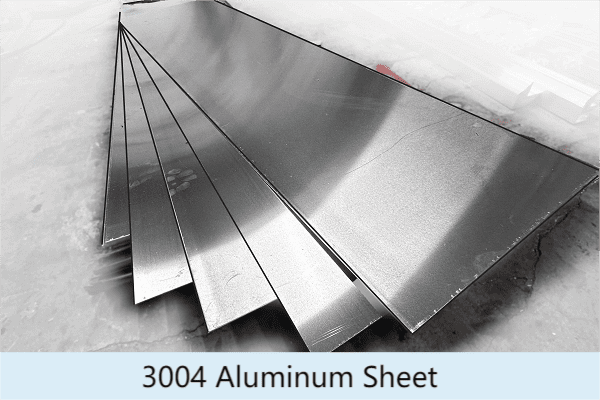
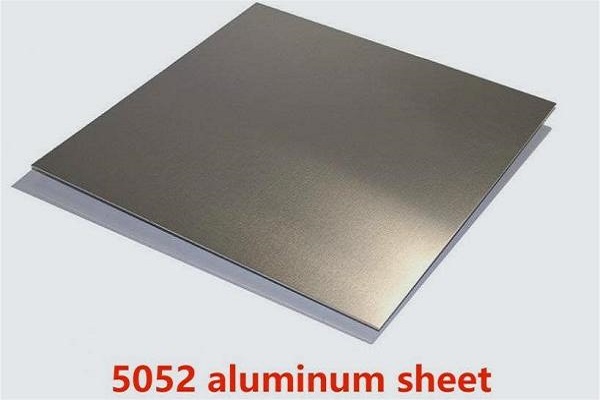
| Comparison Item | 3105 Aluminio | 8011 Aluminio | 3004 Aluminio | 3003 Aluminio | 5052 Aluminio |
|---|---|---|---|---|---|
| Alloy Series | Al-Mn (3000 serie) | Al-Fe-Si (8000 serie) | Al-Mn-Mg (3000 serie) | Al-Mn (3000 serie) | Ya ar — Mg (5000 serie) |
| Typical Temper for Vodka Caps | H14 / H16 / H19 | H14 / H16 / H18 | H19 / H24 | H14 / H16 | H32 / H34 |
| Main Characteristics | Excellent balance of strength, ductility, Resistencia ar corrosión, and surface quality; widely optimized for aluminum closure applications | Mextha resistencia, good formability, excellent performance for lightweight and thin-gauge closure materials | Higher strength due to magnesium addition, providing better rigidity and mechanical performance | General-purpose alloy with good corrosion resistance and moderate strength | High strength and excellent corrosion resistance, but lower formability compared with 3000 Aleaciones ar serie |
| Conformabilidad | ★★★★★ Excellent | ★★★★☆ Very Good | ★★★★☆ Very Good | ★★★★☆ Good | ★★★☆☆ Moderate |
| Strength Level | Medium (Tensile strength approx. 120–180 MPa) | Medium to High (Tensile strength approx. 130–190 MPa) | High (Tensile strength approx. 150–220 MPa) | Medium (Tensile strength approx. 125–180 MPa) | High (Tensile strength approx. 210–260 MPa) |
| Resistencia ar corrosión | ★★★★★ Excellent | ★★★★☆ Good | ★★★★★ Excellent | ★★★★★ Excellent | ★★★★★ Excellent |
| Surface Quality & Printing Performance | ★★★★★ Excellent; ideal for coating, lacquering, embossing, and high-quality printing | ★★★★★ Excellent; suitable for printing, coating, and decorative finishes | ★★★★☆ Good; provides good coating adhesion and appearance | ★★★★☆ Good; suitable for standard printed closures | ★★★★☆ Good; suitable for coated applications |
| Embossing Performance | ★★★★★ Excellent | ★★★★★ Excellent | ★★★★☆ Very Good | ★★★★☆ Very Good | ★★★☆☆ Moderate |
| High-Speed Cap Production | ★★★★★ Excellent | ★★★★☆ Very Good | ★★★★☆ Very Good | ★★★★☆ Good | ★★★☆☆ Moderate |
| Aplicaciones típicas | Vodka caps, liquor bottle caps, beverage closures, pilfer-proof caps, ROPP caps | Lightweight bottle caps, pharmaceutical closures, beverage closures | High-strength liquor caps and closures requiring improved rigidity | Standard beverage caps, liquor caps, and general aluminum closures | Special rigid closures requiring higher mechanical strength |
| Overall Suitability for Vodka Caps | ⭐⭐⭐⭐⭐ Excellent | ⭐⭐⭐⭐⭐ Excellent | ⭐⭐⭐⭐☆ Very Good | ⭐⭐⭐⭐☆ Good | ⭐⭐⭐☆☆ Limited |
Processing and production workflow for 3105 sheet into vodka caps
A typical process to convert 3105 aluminum sheet into closure caps for vodka bottles includes several stages:
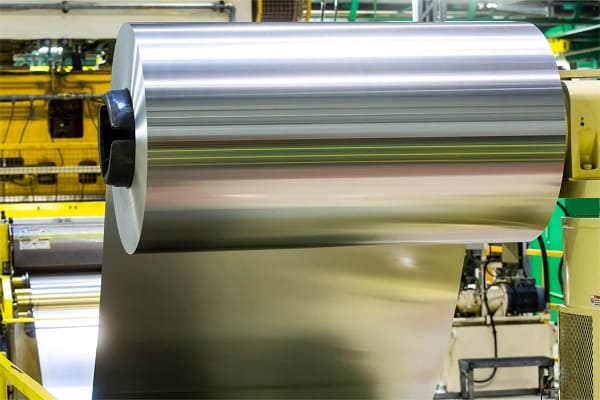
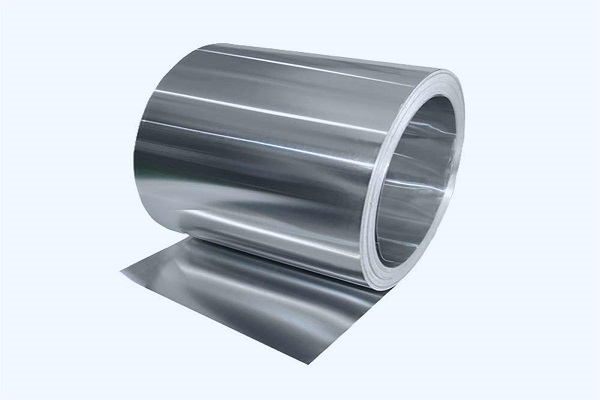
- Slitting and feeding: Coils are slit into the required widths for cap production. Precision slitting minimizes edge defects that translate into cap quality issues downstream.
- Blank formation: The sheet is punched or blanked into cap blanks, designed for the intended shape and wall geometry.
- Deep drawing: Cap blanks undergo deep drawing to form the cap body. This stage is critical for achieving the tall, windowed geometry and ensuring uniform wall thickness.
- Ironing and necking (where applicable): Some cap designs use ironing to reduce wall thickness in the body portion, followed by necking to shape the top and finish edge details. This step demands stable material flow and consistent lubrication to minimize galling and wrinkling.
- Trimming and flashing: The formed caps are trimmed to final dimensions, removing any protruding flash and ensuring a uniform bottom edge.
- Recocido (if needed): Depending on temper, a light anneal step can be used to relieve work-hardening after drawing. This step improves formability for subsequent processes if the cap requires additional reshaping or decoration.
- Surface finishing: Caps receive lacquer, paint, or decorative coating as required. The surface treatment must be compatible with subsequent liner application and sealing processes.
- Printing and decoration: If necessary, graphics, branding, or color layers are applied using screen printing, offset printing, or in-mold labeling techniques. The choice depends on the cap geometry and production line capabilities.
- Liner application: A polymer or elastomer liner is installed on the interior of the cap to create a liquid-tight seal against the bottle neck finish. The liner is carefully chosen to resist ethanol exposure and to maintain odor-free sealing.
- Quality control and testing: Caps undergo dimensional inspection, thickness measurement, surface finish checks, and leak testing. Additional tests address liner adhesion, Resistencia ar corrosión, and packaging compatibility.
- Packaging and shipment: Finished caps are packaged in a way that prevents surface damage and is compatible with downstream packaging equipment.
Each stage presents opportunities to optimize yield and quality. A well-designed process, supported by the appropriate temper choice and thickness, will minimize scrap and ensure that caps meet performance criteria consistently.
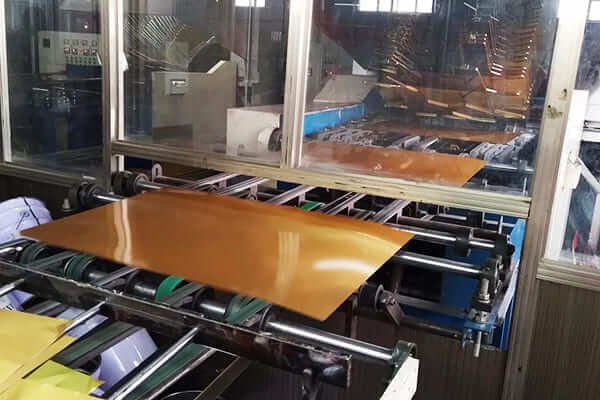
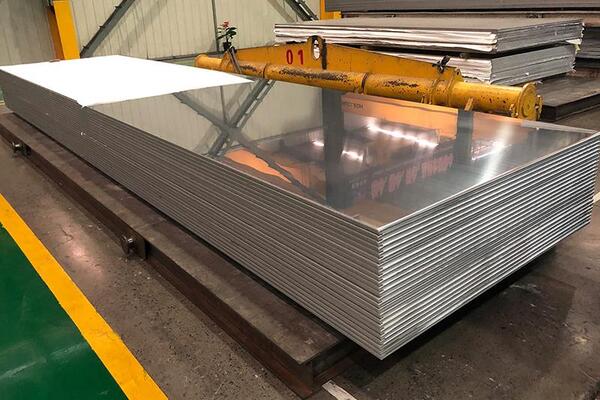
Production of 3105 Aluminum Sheet for Vodka Caps
Surface finishing and coatings: compatibility with liners and branding
The inner liner and outer surface coatings play a critical role in a vodka cap’s performance. Surface finishing steps influence:
- Seal integrity: Proper liner adhesion requires a surface that allows stable bonding and avoids delamination.
- Barrier performance: The coating should resist migration of substances into or out of the cap space, maintaining beverage flavor integrity.
- Aesthetic appeal: Ar njät'i, gloss, and printability of the cap surface contribute to consumer perception and branding.
- Food-contact compliance: Coatings and coatings’ ingredients must be permitted for contact with beverages.
Common options for 3105 caps include:
- Lacquering: Clear or pigmented lacquer layers can protect the surface, provide a base for printing, and improve gloss.
- PVDF (polyvinylidene fluoride) coating: Durable and chemical-resistant, PVDF coatings offer strong weatherability and chemical resistance suitable for beverage closures.
- Anodizing: Aluminum anodizing can provide corrosion resistance: 'ñotho ar embargo, for caps used with liners and certain beverages, anodizing may be limited due to interference with coating adhesion or liner compatibility. In many cap designs, anodizing is less common because it can alter surface energy and affect liner bonding.
- In-mold labeling (IML) or printed overlays: Depending on cap design, decorative graphics may be applied using IML or post-mold printing.
- Inner liner materials: Ethylene propylene diene monomer (EPDM), butyl rubber, and other elastomeric liners are common. Adhesives used to secure the liner must be compatible with the beverage and the metal surface.
Coating and liner compatibility considerations:
- Temperature exposure during sealing: Caps often require heat or pressure application to seal. The coating must retain adhesion and not crack under these conditions.
- Ethanol compatibility: The liner adhesive must not degrade due to exposure to ethanol, and the metal surface should not catalyze any undesirable reactions with the liner components.
- Manufacturing tolerances: Finishes must not cause dimensional changes that interfere with cap fit or sealing.
- Reciclabilidad: For sustainability goals, coatings chosen should not hinder recyclability of the cap and bottle system. Recyclability considerations include avoiding heavy metals or coatings that hinder aluminum recycling streams.
A practical approach is to select coatings and liners based on a defined compatibility matrix, tested under realistic production and storage conditions.
Huawei Aluminum’s service teams typically support customers with this kind of matrix, providing recommendations for surface finishing and liner systems in alignment with the cap design and regulatory requirements.
Material performance in beverage environments: ethanol and corrosion considerations
vodka caps must resist ethanol exposure while preserving flavor, aroma, and product integrity.
Aluminum itself is highly resistant to corrosion, thanks to the natural oxide film that forms on exposure to air.
'Ñotho ar embargo, in the context of a beverage system, several factors influence performance:
- Ethanol exposure: Ethanol-based beverages can affect certain coating and adhesive systems. The properties of the cap liner and adhesive must suit the beverage composition, including ethanol concentration, pH, and storage conditions.
- Cleaning and sanitization: Caps may be cleaned or sterilized during production lines or conveyor sanitation. The material must tolerate these cleaning methods without degradation.
- Salt and humidity exposure: In storage facilities, caps may encounter humidity and salt in the air, especially in international export contexts. The liner and coating synergy must ensure long-term stability.
- Mechanical wear: Handling, capping, and labeling processes impose mechanical stresses. The material’s ductility reduces the risk of micro-cracks or cracks during forming.
For 3105, the Mn additive contributes to stabilizing the oxide layer and providing reliable corrosion resistance in many beverage-related environments.
When used with properly formulated liners and coatings, 3105 demonstrates robust performance in vodka cap applications.
Important note: The performance data is highly dependent on system design. It is essential to verify supplier data with in-house testing, including liner adhesion tests, corrosion tests, and leak tests on actual cap designs.
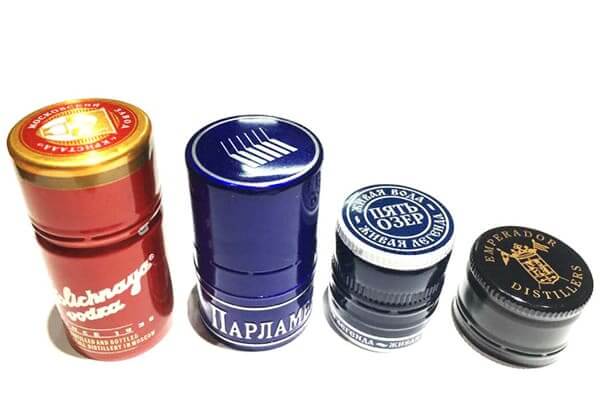
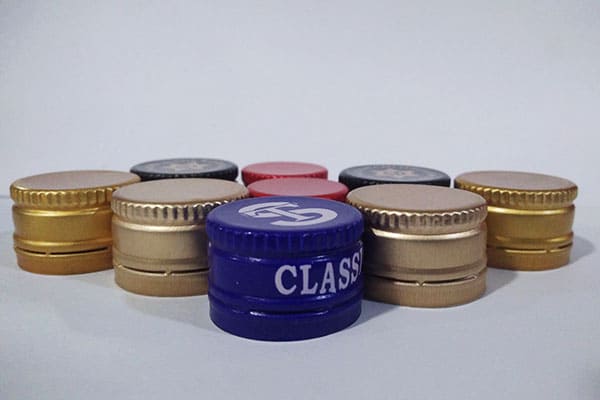
3105 Aluminum Vodka Caps Display
Supplier landscape: Huawei Aluminum and other players
Aluminio Huawei: a credible supplier for 3105 sabanas
Huawei Aluminum Co., Ltd. is a major supplier of aluminum sheet and plate products in China and internationally.
Their portfolio covers a broad range of aluminum alloys, including the 3000-series (Al-Mn) y 3105 for beverage closures and other packaging applications.
Key capabilities typically highlighted by large aluminum producers include:
- Production scale: A high-capacity mill capable of delivering a broad range of thicknesses and widths suitable for cap stock.
- Product range: Sheets for packaging and building applications, Incluido 3105, 3003, 3004, and related heat-treated or tempered products.
- Quality management: ISO-compliant quality systems, with materials tested for mechanical properties, surface finish, and tolerances.
- Certification and traceability: Specifications, batch traceability, and test certificates (COAs) that support quality control across the supply chain.
- Global reach: Export capabilities to meet demand in Asia, Europe, North America, and other regions.
- Sostenibilidad: Initiatives related to energy efficiency, emissions reductions, and responsible sourcing, in alignment with global market expectations.
Huawei Aluminum emphasizes close collaboration with customers to tailor sheet solutions to cap design, temper, espesor, and coating requirements.
They typically offer technical service support to optimize the forming process and provide guidance on surface finishes, liner compatibility, and coating selection.
Hñeti: When engaging with Huawei Aluminum or any supplier, it is prudent to request sample sets, mechanical test data for the intended temper and thickness, and liner/coating compatibility data.
Verifying certifications (hne ej., ISO 9001) and supply-chain traceability is crucial for a long-term production relationship.
Quality assurance, testing, and process controls
For vodka cap production, quality control is essential across the supply chain. Recommended QA practices include:
- Raw material verification: Inspect incoming 3105 sheets for thickness, surface finish, flatness, and any defects. Confirm temper and alloy designation, and review COA.
- Mechanical testing: Tensile testing, yield strength, elongation, and hardness measurements (Rockwell or Vickers) to verify conformity with specified temper ranges and tolerances.
- Surface and coating checks: Assess surface finish, coating adhesion (if any), and gloss. Test the coating for resistance to ethanol and adhesive compatibility.
- Dimensional tolerances: Verify width, espesor, and flatness within defined tolerances. Use guage pins and micrometers for thickness measurement along multiple locations.
- Leak and seal testing: For finished caps, perform leak tests on bottle closures using simulated beverage conditions; ensure liner adhesion is durable under seal pressure.
- Corrosion testing: Conduct corrosion tests, including salt spray or ethanol immersion tests, to assess the long-term performance of the cap-liner combination.
- Color and decoration evaluation: If caps are decorated, verify color match and adhesion stability through curing cycles.
- Process capability: Calculate Cp and Cpk indices to gauge process stability. A Cp/Cpk of 1.33 or higher typically indicates capable processes, but precise targets depend on the production environment.
- Documentation and traceability: Maintain test records for each batch, including alloy grade, temper, espesor, surface finish, and coating or liner pairing. Documentation supports regulatory compliance and customer audits.
In practice, your QA program should be aligned with product specifications, regulatory demands, and customer expectations.
Ar 3105 sheet’s performance in cap applications hinges on controlling temper, espesor, and the drawing process, as well as on verifying compatibility with the liner and coating systems used in finishing.
3105 Aluminum Sheet for Vodka Caps Typical Specifications
| Ar Nthuts'i | Typical Range |
|---|---|
| Aleación | 3105 |
| Atemperar | H14, H16, H19 |
| Espesor | 0.18–0.30 mm |
| Ancho | 500–1000 mm (custom available) |
| Resistencia ar tracción | 150–200 MPa |
| Alargamiento | 2–8% depending on temper |
| Acabado superficial | Mill finish, bright finish, coated surface |
| Aplicaciones | Vodka caps, liquor bottle caps, beverage closures, ROPP caps |
FAQs About 3105 Aluminum Sheet for Vodka Caps
1) Te ra es 3105 chapa aluminio, and why is it used for vodka caps?
– 3105 is an aluminum-manganese alloy known for excellent formability and corrosion resistance. It is used for vodka caps because it allows deep drawing into cap geometry, pairs well with liner systems, and offers reliable performance in contact with ethanol-containing beverages.
2) What temper and thickness should I choose for a vodka cap?
– Typical choices range from annealed (O) to lightly work-hardened (H19/H18 equivalents) in thicknesses around 0.20 Pa 0.40 milímetro, depending on the cap design and drawing requirements. The exact choice depends on your forming process, cap geometry, and line efficiency.
3) How does 3105 compare to 3004 o 5052 for vodka caps?
– 3105 offers a balanced combination of formability and corrosion resistance, with generally better deep-draw performance than 3004 and more formability than 5052 at similar thicknesses. 3004 may be slightly easier to form in some setups, while 5052 can provide higher strength for thicker cap components but may be less forgiving in deep drawing.
4) What coatings and liners are compatible with 3105 caps?
– Lacquers, PVDF coatings, and other surface finishes can be used, provided they are compatible with the liner adhesive and beverage contact requirements. The inner liner materials (such as EPDM, fluorinated elastomers, wa ma'ra ya polímeros) must be compatible with both the cap surface and the beverage composition.
5) What kind of testing should I perform during cap development?
– Perform deep-drawing trials, trimming, lubrication selection, liner adhesion tests, coating adhesion, seal integrity tests, and storage stability tests. Validate margins under thermal cycling, humidity, cleaning processes, and storage conditions.
6) Can 3105 stock be custom-tempered or custom-thicknessed?
– Many suppliers offer customization options, including tailored temper and thickness within reason. Engage with the supplier early to assess feasibility, lead times, and associated costs.
Conclusion
3105 Aluminum Sheet for Vodka Caps represents a practical and reliable solution for modern cap manufacturing.
Its blend of formability, Resistencia ar corrosión, and compatibility with liners and coatings makes it an attractive choice for producers seeking consistent performance, efficient production runs, and a pleasing consumer-facing appearance.
By selecting appropriate temper and thickness, working closely with capable suppliers like Huawei Aluminum, and implementing robust quality assurance and sustainability practices, vodka cap programs can achieve higher yield, better seal integrity, and improved market competitiveness.
The supplier ecosystem for 3105 sheet is well developed, with global mills offering a range of tempers, thicknesses, and finishes to support cap makers, brand owners, and packaging converters.
Aluminio Huawei, in particular, brings a track record of providing sheet stock for beverage closures and related packaging applications, aligning material science with the practical realities of high-speed cap production.
Their technical support teams can assist with process optimization, compatibility testing, and product selection—helping you translate the alloy’s properties into tangible improvements on the factory floor.
Share with PDF: Download

Contesta