1. Nthuts'i ñut'i
3004 Aluminum Sheet for PP Caps provides a practical combination of formability, ndu nzafi, Resistencia ar corrosión, and surface quality for aluminum closure components used in modern packaging systems.
As PP caps and aluminum-plastic closures become increasingly common in beverage, food, pharmaceutical, cosmetic, and other packaging applications, the aluminum material must meet both forming and appearance requirements.
3004 is a 3xxx-series Al-Mn-Mg alloy. Compared with commercially pure aluminum, it offers higher strength while retaining good ductility and corrosion resistance.
This balance makes 3004 a suitable candidate for closure applications where the material must undergo forming without sacrificing dimensional stability or surface quality.
For PP cap manufacturers, alloy selection is only one part of the material specification. Atemperar, espesor, surface condition, coating, forming depth, and production process can all influence the final performance of the closure.
Ir, the right 3004 aluminum specification should be selected according to the actual cap design and manufacturing conditions.
2. What Is 3004 Aluminum Sheet for PP Caps?
2.1 Understanding 3004 Aleación aluminio
3004 belongs to the 3xxx series of wrought aluminum alloys and is primarily an Al-Mn-Mg alloy.
According to commonly referenced specifications, it contains approximately 1.0–1.5% manganese and 0.8–1.3% magnesium, with aluminum making up the balance.
Unlike heat-treatable 2xxx or 6xxx alloys, 3004 is a non-heat-treatable alloy.
Its mechanical properties mainly come from its alloy composition and cold working rather than precipitation hardening.
This metallurgical structure gives 3004 a useful combination of moderate strength, good formability, ne resistencia ar corrosión.
These characteristics are valuable when aluminum must undergo forming operations while maintaining sufficient dimensional and mechanical stability.
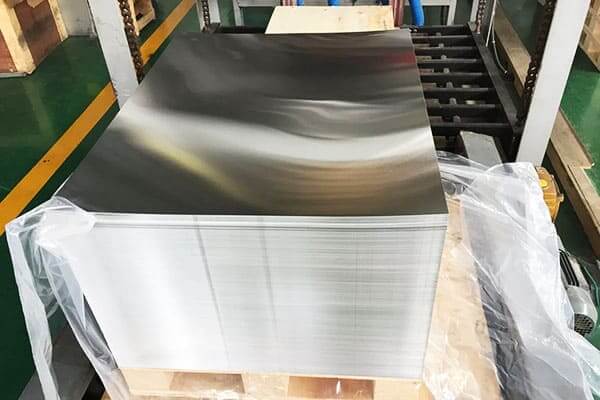
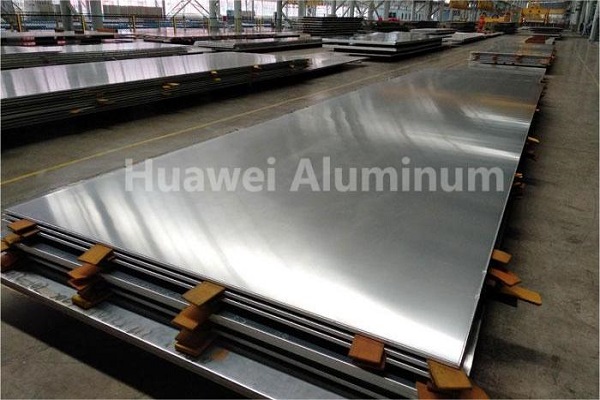
Huawei PP Caps Used 3004 Lámina aluminio
2.2 What Does “3004 Aluminum Sheet for PP Caps” Mean?
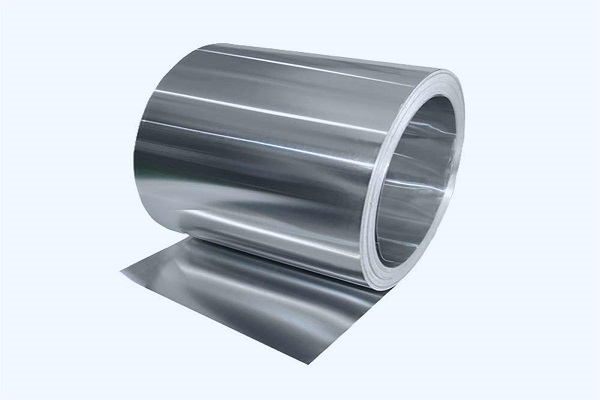
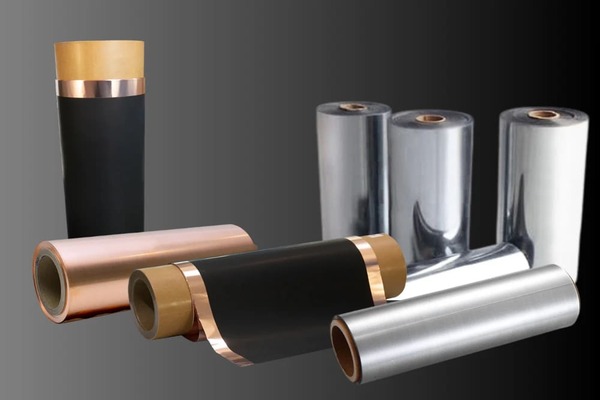
The term refers to 3004 aluminio supplied as sheet, coil, or strip for manufacturing closure components associated with PP cap systems.
The aluminum is not necessarily the entire cap. Depending on the design, it can function as a formed metal closure component, decorative exterior element, sealing-related component, or part of a composite closure structure.
The exact material specification depends on the finished cap. Important variables include:
- Alloy and temper
- Espesor
- Width or strip size
- Forming depth
- Surface condition
- Coating or lacquer
- Printing requirements
- Required dimensional tolerances
Commercial closure materials are available in different alloys, Incluido 3004, 3105, 8011 and others, demonstrating that material selection is application-specific rather than universal.
3. Why Choose 3004 Aluminum Sheet for PP Caps?
3.1 Hño conformabilidad
3004 aluminum offers good ductility and forming performance, making it suitable for stamping, drawing, and other closure-forming processes.
The appropriate temper and thickness can help reduce cracking, wrinkling, and dimensional variation.
3.2 Balanced Strength and Ductility
3004 provides a practical balance between strength and ductility.
It offers higher strength than commercially pure aluminum while maintaining sufficient formability for many closure applications.
3.3 Good Corrosion Resistance
The corrosion resistance of 3004 aluminum supports reliable performance in typical packaging environments.
For more demanding applications, coatings or lacquers can provide additional surface protection.
3.4 Suitable for Coating and Printing
A clean, consistent aluminum surface can support protective coatings, lacquering, coloring, and printing.
These treatments improve appearance while providing additional surface protection.
3.5 Consistent Production Performance
For high-volume PP cap production, consistent espesor, Propiedades mecánicas, Ya ar superficie, and edge condition are essential.
Properly specified 3004 aluminum can provide stable forming performance and help maintain consistent finished-cap quality.
3.6 Flexible Material Options
3004 aluminum sheet can be supplied in different tempers, thicknesses, widths, and surface conditions.
This allows manufacturers to select a material specification based on the cap design, forming depth, tooling, coating, and production requirements.
Overall, 3004 aluminum is valued for its balanced combination of formability, ndu nzafi, Resistencia ar corrosión, and surface-processing compatibility, making it a practical option for PP cap and closure applications.
4. Key Specifications of 3004 Aluminum Sheet for PP Caps
The specification of 3004 aluminum sheet for PP caps should be determined by the closure design, forming process, and required surface condition.
The following parameters represent the key specifications commonly considered for closure applications.
| Parameter | Core Specification |
|---|---|
| Aleación | 3004 |
| Alloy Series | 3xxx Al-Mn-Mg |
| Atemperar | O, H12, H14, H16, H24 |
| Typical Thickness | 0.15–0.30 mm |
| Typical PP Cap Thickness | 0.18–0.25 mm |
| Ancho | Customized to production line |
| Product Form | Sábana, coil, or strip |
| Surface | Mill finish, degreased, pre-lubricated, or coated |
| Resistencia ar tracción | Approx. 155–265 MPa, depending on temper/thickness |
| Límite elástico | Approx. 60–180 MPa, depending on temper/thickness |
| Alargamiento | Approx. 1–16%, depending on temper/thickness |
| Conformabilidad | Good to very good |
| Resistencia ar corrosión | Good to excellent |
| Main Applications | PP caps, ROPP caps, bottle closures, lids |
Hñeti: Mechanical properties vary significantly with temper and thickness.
Ngu, EN 485-2 data for 3004 sheet gives different tensile strength, yield strength, and elongation requirements for O, H12, and H14 conditions.
5. Chemical Composition of 3004 Aluminio
3004 is a non-heat-treatable 3xxx-series aluminum alloy.
Its primary alloying elements are manganese and magnesium, which provide a useful combination of strength, formability, ne resistencia ar corrosión.
Typical Chemical Composition
| 'Nar 'mu̲ | Typical Range / Limit |
|---|---|
| Ya ar | Equilibrar |
| Mn | 1.0–1.5% |
| Mg | 0.8–1.3% |
| Nt'eme | ≤0.7% |
| Hää | ≤0.3% |
| Cu | ≤0.25% |
| Zn | ≤0.25% |
| Ma 'ra ya xe̲ni | Controlled according to applicable standard |
The exact limits can vary slightly between material standards and product specifications, so the applicable ASTM, EN, JIS, or customer specification should govern the final chemical composition.
Role of the Main Alloying Elements
Manganeso (Mn) increases strength while maintaining useful workability. This makes it important for closure materials that require more strength than commercially pure aluminum.
Magnesio (Mg) further contributes to strength and helps maintain the overall performance balance of the alloy.
The controlled levels of iron, silicio, cobre, zinc, and other elements are also important for maintaining consistent metallurgical and processing characteristics.
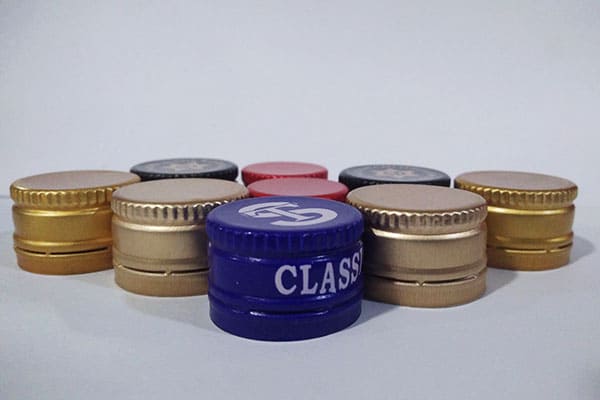
3004 Aluminum Sheet for PP Caps
6. Temper Selection for 3004 PP Cap Material
Temper is one of the most important factors when selecting 3004 aluminum for PP caps.
The same 3004 alloy can provide different strength and forming characteristics depending on its temper.
For closure applications, the selection should focus on the balance between ductility, ndu nzafi, springback, and dimensional stability.
6.1 3004 O Temper
3004 O is the annealed condition and provides the highest level of softness and ductility among common tempers.
It is suitable when the closure design requires substantial deformation or relatively demanding forming.
Its higher ductility can help reduce the risk of cracking during forming.
6.2 3004 H12
H12 is a strain-hardened condition with higher strength than O temper while retaining useful formability.
It can be considered when the finished closure requires additional strength without moving to a heavily hardened condition.
6.3 3004 H14
H14 provides a further increase in strength through controlled cold working.
Compared with O and H12, it generally offers lower ductility but greater resistance to deformation.
It may be appropriate for closure designs where strength and dimensional stability have greater importance.
6.4 3004 H16 and H24
Higher strain-hardened conditions such as H16 can provide increased strength for applications requiring greater rigidity.
H24 combines strain hardening with partial annealing and can provide a different balance between strength and formability.
Availability and suitability should be confirmed according to the required product specification.
6.5 How to Select the Right Temper
A practical selection approach is:
| Requirement | Possible Direction |
|---|---|
| Maximum formability | 3004 O |
| Conformabilidad + moderate strength | H12 |
| Higher strength and stability | H14 |
| Higher rigidity | H16 |
| Balanced strength/formability | H24 |
7. Mechanical Properties That Matter for PP Caps
The mechanical properties of 3004 aluminum directly affect forming performance, dimensional stability, and the quality of finished PP caps.
The most important factors are tensile strength, yield strength, elongation, dureza, and forming consistency.
7.1 Tensile and Yield Strength
Tensile strength determines the material’s resistance to fracture, while yield strength affects how easily it undergoes permanent deformation during forming.
A suitable balance helps the aluminum form correctly while maintaining sufficient strength in the finished closure.
7.2 Alargamiento
Elongation is critical for forming applications because it indicates how much the aluminum can deform before cracking.
Higher elongation generally provides greater forming tolerance, particularly for caps with deeper or more complex geometries.
7.3 Hardness and Springback
Hardness increases with strain hardening. Higher hardness can improve dimensional stability but may also increase springback and reduce formability.
Ir, the temper should be selected according to the required balance between ndu nzafi, ductility, and forming accuracy.
7.4 Earing and Forming Consistency
Earing can cause uneven heights around the edge of a formed aluminum component.
Controlled rolling and annealing help reduce excessive earing and improve dimensional consistency.
For high-volume PP cap production, consistent material properties from batch to batch are essential for maintaining stable forming performance.
8. Manufacturing Process of 3004 Aluminum Sheet for PP Caps
The manufacturing process of 3004 aluminum sheet for PP caps focuses on achieving consistent thickness, stable mechanical properties, good formability, and reliable surface quality.
8.1 Alloy Preparation and Casting
Aluminum and alloying elements are accurately proportioned to meet the required 3004 Composición química.
The molten alloy is then cast into slabs for subsequent rolling.
8.2 Hot and Cold Rolling
Hot rolling reduces the initial slab thickness and establishes a suitable metallurgical structure.
Cold rolling then brings the material to the required thickness while improving dimensional accuracy.
For PP cap applications, tight thickness control helps maintain consistent blanking and forming performance.
8.3 Annealing and Temper Control
Annealing adjusts the material’s hardness, ndu nzafi, and ductility.
The processing route is controlled according to the required temper, ngu O, H12, or H14.
Proper temper control is essential because it directly affects forming behavior.
8.4 Slitting and Cutting
The finished material can be supplied as coil, strip, or sheet.
Accurate slitting and cutting provide consistent widths and clean edges for downstream blanking and forming.
8.5 Surface Preparation
Depending on the application, the aluminum may be degreased, pre-lubricated, lacquered, or coated before shipment.
9. Surface Treatment and Coating Options
Surface treatment plays an important role in the forming, appearance, corrosion protection, and downstream processing of 3004 aluminum sheet for PP caps.
9.1 Mill Finish
Mill-finish aluminum provides a clean base for further processing.
It is suitable when the customer plans to perform coating, printing, or other surface treatments.
9.2 Degreased Surface
Degreasing removes residual rolling oil and contaminants, providing a cleaner surface for subsequent coating, printing, or forming processes.
9.3 Pre-Lubricated Surface
Pre-lubrication can reduce friction between the aluminum and forming tools.
It helps support smoother forming and can reduce surface damage during stamping or drawing.
9.4 Lacquered or Coated Surface
Lacquering and coating can provide additional corrosion protection, surface protection, and decorative effects.
Common options include clear, colored, and application-specific coatings.
9.5 Imprenta
For branded closures, coated aluminum can be printed with logos, patterns, ne nuna ar producto.
A uniform substrate and good coating adhesion help maintain consistent printing quality.
10. Applications of 3004 Aluminum Sheet for PP Caps
3004 aluminum sheet can be used for a range of aluminum closure components where a balance of formability, ndu nzafi, Ya ar superficie, ne resistencia ar corrosión is required.
The exact alloy and temper should be matched to the closure design and forming process rather than treated as universal.
10.1 Beverage and Spirits Closures
3004 can be considered for aluminum closure components used on beverage and spirits bottles.
Its combination of strength and formability supports forming operations while maintaining the required appearance of the finished closure.
10.2 Food Packaging Closures
For food packaging, the material may be used where good surface quality, Resistencia ar corrosión, and compatibility with coatings or protective finishes are required.
10.3 Cosmetic Packaging
Decorative appearance is particularly important for cosmetic packaging.
3004 aluminum can be supplied with suitable surface finishes, coatings, and printing to support branded closure designs.
10.4 Pharmaceutical and Healthcare Closures
For pharmaceutical-related closures, material selection must consider forming performance, cleanliness, coating requirements, and applicable regulatory specifications.
The aluminum alloy should be evaluated together with the complete closure and sealing system.
10.5 ROPP and Other Aluminum Closure Components
Depending on the specific product design, aluminum closure stock may be used for ROPP and pilfer-proof closure systems.
'Ñotho ar embargo, 8011 y 3105 are also widely used closure alloys, so 3004 should be selected based on actual forming and performance requirements.
11. 3004 vs. 3003 vs. 3105 vs. 8011 for PP Caps
Different aluminum alloys provide different combinations of ndu nzafi, ductility, forming performance, and dimensional stability.
For PP caps and aluminum-plastic closures, the most suitable alloy depends on the cap geometry, forming depth, espesor, temper, and production conditions.
Key Comparison
| Ha̲i | 3004 | 3003 | 3105 | 8011 |
|---|---|---|---|---|
| Alloy Series | 3Xxx | 3Xxx | 3Xxx | 8Xxx |
| Main Alloying Elements | Mn + Mg | Mn | Mn + Mg | Nt'eme + Hää |
| Heat Treatability | Non-heat-treatable | Non-heat-treatable | Non-heat-treatable | Non-heat-treatable |
| Typical Closure Tempers | H14, H16, H24, H38 | H14, H16, H18, H24 | H14, H16, H18, H24 | H14, H16, H18 |
| Typical Thickness | 0.15–0.30 mm | 0.20–0.50 mm | 0.18–0.30 mm | 0.18–0.30 mm |
| Typical Tensile Strength | ~250–260 MPa* | 145–210 MPa* | 150–225 MPa* | 125–165 MPa* |
| Typical Yield Strength | ~230–245 MPa* | Not uniform by temper | ~130–145 MPa+* | Not uniform by temper |
| Alargamiento | ~5.5–8.5%* | ~1–2%* | ~2–8%* | ~1–2%* |
| Conformabilidad | Xi hño | Very Good | Very Good | Excelente |
| Strength Level | Medium–High | Medium | Medium–High | Low–Medium |
| Earing Control | Application-dependent | ~4% in cited closure data | ~4% in cited closure data | ~3% in cited closure data |
| Surface/Coating Compatibility | Xi hño | Xi hño | Very Good | Very Good |
| Typical Positioning | Balanced strength + formability | General forming | Higher-strength closure stock | Deep-forming / flexible closure stock |
*Representative closure-stock values for specific tempers and thickness ranges, not universal alloy limits. The cited closure data reports 3004-H38 at approximately 250–260 MPa tensile strength and 5.5–8.5% elongation; 3003 y 3105 values vary substantially by temper.
12. Conclusion
3004 aluminum sheet for PP caps offers a practical combination of formability, moderate strength, Resistencia ar corrosión, and surface-processing compatibility.
These characteristics make it a potential material for closure components where both forming performance and finished appearance are important.
'Ñotho ar embargo, successful PP cap production depends on more than alloy selection. Atemperar, espesor, surface condition, lubrication, coating, earing control, and dimensional consistency all influence the final result.
For this reason, buyers should define 3004 aluminum according to the complete production requirement rather than simply ordering a standard alloy.
A well-matched combination of aleación + temper + espesor + surface condition + forming process can provide more stable production and consistent closure quality.
FAQs
Q1. Te ra es 3004 aluminum sheet used for in PP caps?
3004 aluminum sheet can be used for aluminum closure components that require a balance of formability, ndu nzafi, Resistencia ar corrosión, and surface quality.
Q2. Is 3004 aluminum suitable for forming PP caps?
Hä, 3004 offers good formability, but the appropriate temper and thickness should be selected according to the cap geometry, forming depth, and tooling.
Q3. Is 3004 better than 8011 for PP caps?
Not universally. 8011 is widely used for closure applications and offers excellent forming performance, while 3004 can provide a useful balance between strength and formability. The better choice depends on the specific production requirements.
Q4. What factors should be considered when buying 3004 PP cap material?
Key factors include aleación, temper, espesor, Ancho, forming requirements, earing, surface condition, coating, and dimensional tolerances.
Q5. Can 3004 aluminum be coated or printed?
Hä. Depending on the application, 3004 aluminum can be supplied with suitable surface preparation, lacquer, coating, and printing systems.
Q6. Can 3004 aluminum sheet be customized for PP cap production?
Hä. Suppliers can generally customize thickness, Ancho, temper, surface condition, coil or sheet dimensions, and other requirements according to the customer’s production process.


Contesta