Omuaraa
1100 Aluminum Round Blank for Sign Board is a foundational material choice for many signage projects that demand a balance of formability, Te mau mana'o tauturu no te haapiiraa, and surface finish.
When designers, fabricators, and signage installers seek reliability and consistency, selecting the right aluminum blank can save time, reduce waste, and improve the final appearance of a sign.
This blog post delves into the critical aspects of 1100 aluminum round blanks, with a particular focus on their use in sign boards.
We explore material properties, manufacturing processes, finishes, and practical fabrication tips, and we compare 1100 round blanks with alternative aluminum options to help you make informed decisions.
No ni'a i te 1100 Aluminum and Signage
1100 aluminum is part of the 1xxx series, the purest commercially available aluminum alloys.
It typically contains a minimum of 99% aluminum, with trace elements present in very small amounts.
This composition gives 1100 its standout characteristics: excellent corrosion resistance, superb formability, and a bright, reflective surface when polished or anodized.
For sign boards, these properties translate into:
- Easy sheet and blank forming for circular or round sign blanks with tight tolerances.
- Strong resistance to weathering, making signs suitable for outdoor use in a variety of climates.
- Excellent paint adhesion for screen-printing, vinyl overlays, or powder coatings.
- A lightweight profile that simplifies installation and reduces structural support requirements.
The emphasis on round blanks in signage arises from aesthetic considerations (round signs have universal visibility) and manufacturing practicality (round blanks can be cut, stamped, or punched with predictable outcomes).
1100 round blanks support high-clarity surface finishes, allowing the sign to remain legible with long service life.
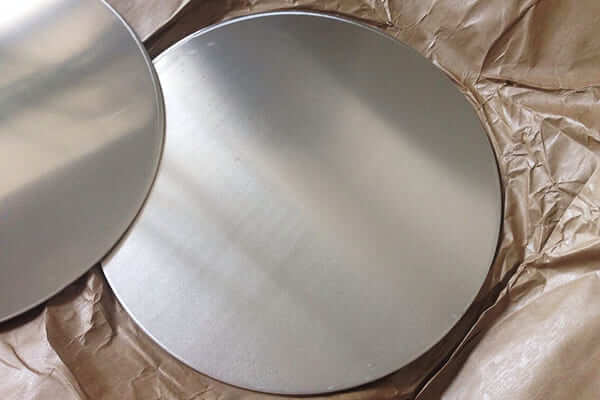
Sign Board Used 1100 Aluminum Circle
Why 1100 Aluminum Round Blank for Sign Boards?
There are several compelling reasons to choose 1100 aluminum round blanks for sign boards:
- Te vai-ti'amâ-raa: The malleability of 1100 aluminum in O (Te mau nota) temper allows for stamping, Te mau mana'o tauturu no te, and punching without cracking or losing integrity, enabling a clean circular profile for the sign substrate.
- Te faaotiraa i te mau mea atoa: Its high ductility supports high-quality finishing methods, including anodizing, painting, screen printing, and vinyl lamination. A bright, reflective surface can improve sign legibility, especially in low-light conditions when paired with reflective materials.
- Te patoiraa i te mau manumanu ino: 1100 aluminum forms a robust protective oxide layer in most environments. Outdoor signage remains visually appealing with minimal maintenance.
- Compatibility with Coatings: The material accepts a wide range of coatings and protective films, and it shows good adhesion for vinyl, powder coatings, and screen-printed inks.
- Availability and Cost: As one of the first commercially produced aluminum alloys, 1100 is widely available through major aluminum manufacturers and distributors. It offers a cost-to-performance ratio that often makes it a practical choice for signage projects.
What to Expect in the 1100 Aluminum Round Blank Specification
In the signage context, a typical 1100 aluminum round blank might be specified with the following characteristics:
- Alloy: 1100 (commercially pure aluminum)
- Te huru â te huru: O (fully annealed) for maximum ductility, or H-series temper (H12, H14) where additional strength is desired without compromising formability
- Te mau nota: Common round blank diameters range from small to large formats (ei hi'oraa, 100 e tae atu i te 600 mm or more) depending on the project
- Me'ume'u: Ranges from 1.0 mm to several millimeters, again depending on sign size and mounting requirements
- Tolerances: Dimensional tolerances suitable for stamping and finishing processes, typically in the tenths of a millimeter to hundredths of an inch
- Surface: Mill finish, brushed finish, or pre-treated surfaces such as anodized or painted
Fabricators will optimize the exact tolerances to meet the project’s assembly tolerances and finishing requirements.
Huawei Aluminum and other leading producers often provide a range of standard options and can customize dimensions to fit signage needs.
Product Overview: 1100 Aluminum Round Blank
Material Composition and Standards
1100 aluminum is the purest aluminum alloy commonly used in industrial applications. It is widely recognized for its:
- High corrosion resistance due to the purity level.
- Superior workability, making it suitable for stampings, deep drawing, and complex curvatures.
- Consistency in surface finishing, including bright, reflective finishes after polishing and excellent adhesion for coatings.
While exact alloy compositions can vary slightly by producer, 1100 typically contains about 99% aluminum content, with trace elements kept to very low levels to maintain its purity.
The alloy is commonly supplied in a variety of tempers, tae noa'tu i te:
- O temper (Te mau nota): Maximum ductility, easy to form and stamp
- H12/H14 temper: Increased strength through strain hardening while preserving some formability
- Other temper variants may be available depending on the supplier and the fabrication process
Standards and certifications from manufacturers like Huawei Aluminum align with international norms for 1xxx-series alloys, ensuring traceability, consistent chemistry, and reliable mechanical behavior for sign industry applications.
Dimensions and Tolerances
Round blanks for signs are often specified by diameter and thickness, with tolerances that reflect the intended finishing processes (Te mau mana'o tauturu no te, Te mau nota, or laser engraving).
Typical tolerances you might encounter include:
- Diameter tolerance: ±0.1 to ±0.5 mm for standard sizes, tighter for high-precision needs
- Te farii - noa - raa i te mau mea atoa: ±0.05 to ±0.2 mm, depending on thickness and manufacturing method
- Squareness and flatness: Dependent on rolling or flat-blank formation methods, but essential for ensuring the sign sits flush against mounting surfaces
Manufacturers such as Huawei Aluminum will typically offer standard blanks in a catalog, with the ability to produce customized diameters and thicknesses to support signage projects.
When planning a round sign, it is crucial to specify the bending radius if the round blank will be formed or curved as part of the sign assembly.
Surface Finishes and Coatings
1100 round blanks can be finished in multiple ways to achieve the desired aesthetics and protection. Common surface options include:
- Mill finish: Natural surface cost-effective and suitable for further processing
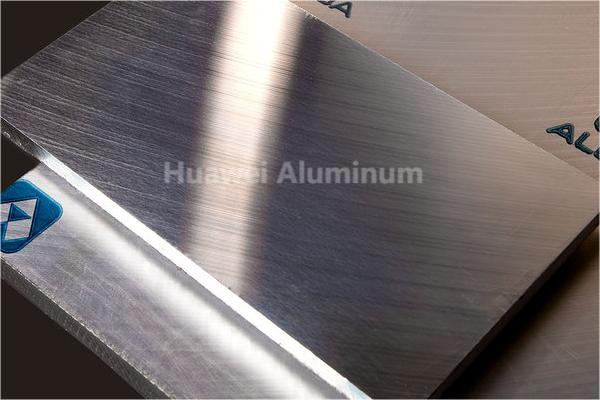
- Polished finish: Achieves a bright, mirror-like appearance ideal for signage with high visual impact
- Anodized finish: Improves wear and corrosion resistance; often available in clear or color tones
- Painted or powder-coated: Coatings applied for color customization and UV resistance
- Vinyl overlays: Used for typography or graphics, especially in signage that requires rapid changes or updates
Each finish affects how the sign will be perceived in various lighting conditions and weather scenarios.
Anodizing, ei hi'oraa, increases surface hardness and resistance to corrosion, while painting provides a broad color palette and gloss levels.
Manufacturing Processes
1110 aluminum round blanks can be produced using several manufacturing routes, depending on order size, tolerances, and end-use requirements. Common processes include:
- Rolling and extrusion: For consistent thickness and diameter across large runs
- Shearing and blanking: Produces round shapes from sheet stock with high repeatability
- Deep drawing and stamping: Creates curved forms or embossed elements for decorative or functional signage
- Cutting and finishing: Finishes such as deburring, edge polishing, and deburr operations ensure a clean edge for mounting and assembly
For a sign board project, the process chosen will impact production lead times, cost, and the finishing options available.
Huawei Aluminum typically maintains robust sheet and blank production capabilities to support high-volume signage programs as well as bespoke runs.
Quality Control and Certifications
Quality control is a key consideration when selecting a supplier. To ensure performance, suppliers in the aluminum round blank market generally implement:
- Raw material verification: Certification of aluminum purity and traceability
- Dimensional inspection: Verification of diameter, Te mau mana'o tauturu no te, flatness, and edge quality
- Surface finish verification: Confirmation of surface texture, coating adhesion, and color precision for painted or anodized finishes
- Non-destructive testing: Techniques such as ultrasonic thickness checks for certain orders and applications
- Compliance with environmental and quality standards: Certifications to frameworks like ISO 9001, ISO 14001, and relevant industry-specific standards
Huawei Aluminum emphasizes rigorous quality control, process traceability, and supplier accountability, which helps signage manufacturers reduce risk across the supply chain.

1100 Aluminum Round Blank for Sign Board
Supplier Spotlight: Huawei Aluminum
Company Background and Capabilities
Huawei Aluminum is a well-known manufacturer and supplier of aluminum products, including 1xxx-series alloys and custom blanks suitable for signage, architectural finishes, and a broad range of industrial applications.
The company maintains integrated production lines that cover smelting, Te mau mana'o tauturu no te, and finishing, enabling it to offer:
- A broad portfolio of aluminum round blanks, Te mau nota, and extrusions
- Custom diameters and thicknesses to meet design requirements
- Surface treatments including anodizing, painting, and protective coatings
- Compliance with international standards and traceability for each batch
Huawei Aluminum’s positioning in the market rests on reliability, responsiveness, and the ability to tailor products to specific signage projects, from small special orders to large campaigns requiring consistent supply.
Why Huawei Aluminum for Signage Projects
Signage projects demand predictable performance, consistent color and finish, and timely delivery. Huawei Aluminum addresses these needs through:
- Te peu tumu: Ability to tailor round blank sizes and temper levels to match design specifications
- Surface finish options: A wide range of finishes that enhance aesthetics and durability
- Quality and traceability: Documented material composition and process controls for every batch
- Global reach: Access to a broad network of distributors and logistics partners to support installation in diverse locations
This combination of capabilities helps signage teams avoid bottlenecks, maintain design fidelity, and deliver projects on schedule.
Te mau parau opaniraa, Te vai - papu - raa, and Supply Chain
Huawei Aluminum aligns its operations with recognized quality and environmental standards.
While specific certifications vary by facility and region, suppliers of this caliber typically pursue:
- ISO 9001 for quality management
- ISO 14001 for environmental management
- Industry-specific certifications related to aerospace, Te mau mana'o tauturu no te, or construction if applicable
- Responsible sourcing commitments, including recycling and waste reduction programs
Sustainability is a core concern for modern signage suppliers. Aluminum is inherently highly recyclable, and using 1xxx-series round blanks helps signage projects support sustainable construction and maintenance programs.
Huawei Aluminum’s emphasis on recycling-friendly practices and material traceability is aligned with the broader industry trend toward sustainable manufacturing.
Global Supply and Distribution
The aluminum industry features a well-developed global logistics network. Huawei Aluminum typically operates with:
- A domestic production base and export capabilities
- Strategic partnerships with logistics providers to ensure on-time delivery
- Packaging designed to prevent edge damage for round blanks, especially during long-haul transport
- Flexible order quantities to support both small signage jobs and large municipal or corporate campaigns
For signage professionals, these capabilities translate into lower risk of stockouts, more consistent lead times, and simpler project planning.
Comparative Analysis: 1100 Aluminum vs Alternatives for Signage
Choosing between 1100 aluminum round blanks and alternative alloys depends on project requirements such as aesthetics, rigidity, weather resistance, and cost.
Below are practical comparisons to help you decide.
1100 te mau 6061
- Aesthetic and finish: 1100 provides excellent formability and surface finish potential, ideal for polished looks and high-quality anodizing. 6061, while versatile, is harder and more prone to surface challenges when trying to achieve a bright finish on complex geometries.
- Te vai-ti'amâ-raa: 1100 is easier to stamp and form into round blanks, especially in O temper, thanks to its higher ductility. 6061 requires more careful handling to avoid cracking during forming.
- Te patoiraa i te patoiraa: Both are corrosion resistant, but 1100’s higher purity helps resist corrosion more uniformly in aggressive environments. 6061 can develop micro-galvanic issues if not properly treated.
- Strength-to-weight: 6061 is significantly stronger than 1100 in most tempers, making it more suitable for structural or load-bearing components. For signs, where the substrate primarily carries a static load and needs a premium surface, 1100 is often a better finish choice.
- Cost: 6061 generally costs more than 1100 due to alloying elements and processing requirements, which makes 1100 a more economical option when appearance and corrosion resistance are the primary drivers.
1100 te mau 3003
- Te vai-ti'amâ-raa: Both alloys are highly formable, but 1100’s higher purity means more uniform performance across blanks. 3003 is alloyed with manganese, which can affect ductility and finish in some applications.
- Puai: 3003 is somewhat stronger than 1100 in comparable tempers, but for signage substrates, the difference in strength is often not the primary concern; finish quality and corrosion resistance can be more important.
- Te patoiraa i te patoiraa: Both offer excellent corrosion resistance, though 1100’s higher purity gives slightly more uniform behavior across the surface.
- Cost: 1100 typically presents a lower cost than 3003, especially for large round blanks, due to simpler processing and higher availability.
- Surface finishing: Both respond well to anodizing and painting, but consistent color matching and surface texture can be more predictable with 1100 in certain finishes.
1100 te mau 1050
- Similarities: 1050 is another commercially pure aluminum alloy with high corrosion resistance and good formability; 1100 e 1050 are often used interchangeably for decorative panels and signage substrates.
- Differences: The chemical composition tolerances can differ slightly by producer, which can influence finish uniformity and color when anodized or painted.
- Cost and availability: Availability and pricing are typically similar, with minor variations depending on the supplier and region.
1100 in Temper Variants (H-Tempered vs O Temper)
- O temper: Maximum ductility and formability; ideal for round blanks that require deep drawing or bending without cracking. Finishes such as polishing and anodizing perform well, with minimal risk of surface cracking.
- H12 and H14: These tempers increase strength via work hardening while maintaining some formability. They can be suitable for signs that require slightly higher stiffness without exceeding the forming capabilities of the equipment.
- Considerations: Choosing temper depends on the required rigidity, the forming method, and the intended mounting approach. For most round sign blanks, O temper provides the best combination of formability and surface finish, while H-tempers are reserved for more demanding shapes and durability requirements.
Market Trends and Applications
Signage Industry Growth and 1100 Availability
The signage industry continues to evolve with technological improvements in materials, coatings, and digital printing.
Ua haapii mai te 1100 aluminum round blank remains a credible option for:
- Outdoor architectural signs where longevity and weather resistance matter
- Indoor signs that require a premium surface for paint or vinyl graphics
- Display panels on kiosks or public information boards where curved or round shapes are desired
As demand grows for aesthetically superior signs and sustainable materials, 1100’s recyclability and low weight continue to be compelling benefits.
Huawei Aluminum and other manufacturers maintain scalable production capacities to meet increases in orders across municipal, corporate, and commercial signage programs.
Environmental Considerations and Recyclability
Aluminum is one of the most recyclable materials in the construction and signage sectors.
Recycled aluminum preserves most of the properties of virgin aluminum, enabling circular life cycles with relatively low energy input compared to primary production.
For sign manufacturers, using 1100 round blanks from a reputable supplier supports sustainable design goals, reduces waste on the shop floor, and aligns with green-building certifications and procurement standards.
Case Studies and Use-Cases
- Outdoor round signs for parks and recreational areas use anodized 1100 round blanks with protective coatings to maximize weather resistance.
- Retail storefronts employ 1100 round blanks with painted or vinyl graphics to achieve a high-gloss finish and color consistency.
Case studies emphasize the importance of choosing a supplier capable of providing consistent material quality, finish options, and reliable delivery schedules—precisely the strengths offered by Huawei Aluminum through its integrated manufacturing capabilities and distribution network.
Processing and Fabrication Tips
Cutting, Drilling, and Bending Guidelines
- Pre-drilling: For near-edge hole punching on 1100 round blanks, use pilot holes with appropriate clearance to reduce burrs and keep edge quality intact.
- Cutting: When cutting rounds from sheet stock, maintain consistent feed rates, sharp blades, and proper lubrication to avoid galling and edge tearing.
- Bending: For O temper 1100, gentle bending radii are recommended to minimize wrinkling or cracking. If deeper curvature is required, annealing can restore ductility between forming steps.
- Deburring: Deburr edges after forming to avoid sharp edges that may damage graphic materials or pose safety concerns to installers.
Surface Finishing and Coating Preparation
- Polishing: Achieve high-gloss finishes by sequentially using finer grits and polishing compounds. Final buffing should be performed with carefully controlled pressure to avoid heat buildup that might alter temper.
- Anodizing: For outdoor durability, Te mau mana'o tauturu no te (especially hard anodizing) can significantly increase wear and corrosion resistance. Ensure the base surface is free of contaminants for uniform coating thickness.
- Painting: Use primers compatible with aluminum and the chosen topcoat. Pre-treatment (etching and conversion coatings) improves paint adhesion and long-term color stability.
- Vinyl graphics: Clean the surface thoroughly with recommended solvents before vinyl application. Use a heat gun or squeegee to remove air pockets for a clean application.
Protective Coatings and Corrosion Resistance
- Clear coats: A UV-resistant clear coat can extend the life of painted or natural aluminum substrates.
- Color stability: For signage with color overlays, choose coatings designed for outdoor use to resist fading due to UV exposure.
- Maintenance schedules: Outdoor signs should be inspected periodically for coating integrity, especially in coastal or industrial environments where salt spray or pollutants accelerate wear.
Procurement and Supply Chain
Lead Times and Minimum Order Quantities
Lead times for 1100 aluminum round blanks depend on the supplier, customization requirements, and current production capacity. Typical ranges are:
- Standard stock blanks: 1–2 weeks for production and delivery
- Custom diameters and thicknesses: 3–6 weeks or longer, depending on tooling and demand
- Large campaigns: Lead times can be extended; early engagement with the supplier helps ensure on-time delivery
Minimum order quantities vary by supplier, often ranging from small lot sizes to full container loads.
Huawei Aluminum and similar manufacturers can accommodate both small sign projects and large orders through a combination of standard catalog products and custom manufacturing.
Logistics and Packaging
- Packaging: Round blanks are typically packaged in protective sleeves and crates to prevent edge damage and surface scratches. For larger orders, pallets or containers with climate-controlled conditions may be used.
- Te faurao: Air freight or sea freight depending on urgency and geography. Lead-time optimization includes choosing the best mode to balance cost and timelines.
- Te mau parau papa'i: Batch certificates, material test reports, and conformity documentation help ensure traceability and compliance with project requirements.
Quality Assurance and Inspection
- Incoming inspection: Checks for diameter, Te mau mana'o tauturu no te, edge quality, and surface finish before acceptance into the project workflow
- Coating/finish verification: Sample coatings or anodized finishes should be tested for adhesion and color consistency
- Non-destructive tests: For critical applications or high-value projects, non-destructive checks may be performed, including surface inspection and thickness measurement
FAQs
What is the primary advantage of using 1100 aluminum round blanks for sign boards?
High formability, excellent surface finish options, and superior corrosion resistance make 1100 round blanks ideal for circular signs with premium aesthetics and outdoor durability.
Can round blanks be customized to any diameter or thickness?
E. Producers like Huawei Aluminum can offer standard catalog sizes and custom diameters and thicknesses to meet project requirements, subject to tooling and order volume.
Which temper is best for outdoor signage?
For most round sign substrates, 1100-O temper offers superior formability and finishing options. If higher stiffness is needed, a shallow H-temper can be considered, provided the forming equipment can handle the material’s strength.
How does 1100 compare to other aluminum alloys for signs?
1100 provides the best combination of purity, Te mau mana'o tauturu no te haapiiraa, and finish readiness among the 1xxx series. For higher strength requirements, other alloys like 6061 e aore râ, 3003 may be chosen, but at a trade-off with formability, corrosion behavior, or cost.
What finishes work best for 1100 round blanks in signage?
Anodizing (clear or color), painting, powder coating, and vinyl overlays are common options. The choice depends on the environment, desired aesthetics, and maintenance plan.
How sustainable is aluminum for signage?
E nehenehe e faaohipa - faahou - hia te Aluminum, and recycling requires significantly less energy than primary production. Choosing 1100 round blanks from responsible suppliers aligns with sustainability goals and reduces environmental impact.
Conclusion
Choosing the right 1100 Aluminum Round Blank for Sign Board is a decision that touches on aesthetics, durability, and cost efficiency.
The purity and formability of 1100 aluminum, together with an array of available finishes, make it a dependable substrate for a wide range of sign applications.
Suppliers like Huawei Aluminum bring strong capabilities in custom sizing, finishes, and quality assurance, helping signage professionals meet design precision, outdoor durability, and timely delivery.
The practical guidance in this article—covering material properties, manufacturing considerations, comparative alloy analyses, and supplier insights—aims to help you plan, procure, and fabricate high-quality sign boards with confidence.
By focusing on the unique advantages of 1100 aluminum round blanks and leveraging reliable suppliers, you can optimize your signage projects for performance, appearance, and sustainability.
If you are evaluating suppliers for your next signage initiative, consider the combination of material quality, customization options, and service reliability that Huawei Aluminum and similar reputable manufacturers provide, ensuring your sign projects stand the test of time and the demands of real-world use.
Share with PDF: Download




A vaiiho i te hoê pahonoraa