6.5 Micron Aluminum Foil Flexible Packaging
In the world of flexible packaging, thickness matters. When the goal is to balance barrier performance, cost, manufacturability, and sustainability, 6.5 micron aluminum foil emerges as a compelling option for many applications.
This article dives deep into 6.5 μm aluminum foil for flexible packaging, covering technical specifications, processing considerations, lamination strategies, application domains, market dynamics, and supplier context with a detailed look at Huawei Aluminum—a prominent supplier in this space.
Hi'oraa rahi no 6.5 Micron Aluminum Foil in Flexible Packaging
6.5 μm aluminum foil sits at a crucial intersection of performance and economic efficiency. Thinner foils reduce the package weight, enable higher packaging density, and lower material costs per unit area, which can translate into reduced transportation emissions and overall lifecycle impact.
Tera râ,, thinning the foil increases sensitivity to moisture, oxygen transmission, and mechanical handling during manufacturing and end-use packaging processes.
The challenge is to maximize barrier integrity and seal reliability through material choice, foil quality, coordination with laminate layers, and process optimization.
Two guiding truths frame the 6.5 μm foil decision:
- Barrier performance is not determined by foil alone. In flexible packaging, barrier is the result of the entire structure: Te mau mana'o tauturu no te, coatings, and laminates. A 6.5 μm foil can deliver excellent performance when paired with compatible adhesive systems and high-barrier laminates, particularly in short-shelf-life or low-oxygen scenarios.
- Process compatibility matters. Achieving consistent thickness, surface finish, and mechanical behavior at 6.5 μm requires tight rolling controls, precise tempering, and robust quality assurance. The downstream lamination and sealing steps need to be matched to foil properties to prevent delamination, Te mau nota, or seal defects.
6.5 μm foil is commonly produced from standard aluminum alloys used in packaging, with 8011 e 1100 being among the most relevant.
The choice of alloy, temper, and surface finish influences drawability, pinhole resistance, sealing behavior with various laminates, and printability.
In practical terms, brands often adopt 6.5 μm as the target thickness for snacks, confectionery, coffee packaging, and certain pharma and medical packaging where weight savings and formability are important, while maintaining acceptable barrier performance with laminated structures.
Key considerations for selecting 6.5 μm foil include:
– Compatibility with heat-sealing films and adhesives
– Printing and decoration requirements (e.g., ink adhesion, surface roughness)
– Food-contact compliance and regulatory status
– Recyclability and post-consumer materials strategy
– Equipment capabilities, including form-fill-seal speeds and die-cutting tolerances
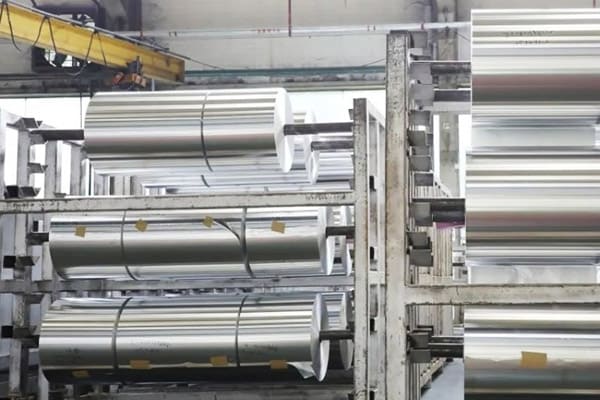
6.5 Micron Aluminum Foil Flexible Packaging
Technical Characteristics of 6.5 Micron Aluminum Foil
Alloy, temper, and surface finish
- Te mau mana'o tauturu no te haapiiraa: The most common packaging foil alloys are in the 1xxx and 8xxx families. For 6.5 μm foil, 8011-O (Te mau nota) and 1100-O are among the preferred options due to excellent corrosion resistance, ductility, and formability. 8011-O offers robust barrier when used in conjunction with laminates; 1100-O is a highly pure alloy with exceptional formability but relatively lower intrinsic barrier than some 8xxx alloys, which is offset by laminate design.
- Te huru â te huru: For packaging foil, O (Te mau nota) is widely used when high formability and pinhole resistance are paramount prior to lamination. I roto i te tahi mau tupuraa, lightly tempered (H14 or H16) foils are used to provide a balance of stiffness and formability for specific convertor equipment. The temper choice affects flatness, tensile strength, and machinability in rotating mills and lamination lines.
- Surface finish: Bright/ sheen finishes maximize printability and the aesthetic appeal on certain packaging fronts. Dull (matte) finishes are common where glare reduction or downstream lamination processes benefit from improved adhesive wet-out and ink adhesion. Surface roughness, gloss level, and pinhole density all influence downstream printing and lamination quality.
Summary of practical implications:
– 6.5 μm 8011 aluminum foil often yields excellent barrier-to-weight performance when incorporated into a well-designed laminate.
– Surface finish choice should align with downstream printing requirements and adhesive systems.
– Temper choice should reflect equipment capabilities and desired mechanical performance in the converting line.
Thickness tolerance and dimensional stability
- Typical thickness tolerance for 6.5 μm foil in modern rolling operations is in the low micrometer range (±0.2 μm to ±0.5 μm, depending on process controls and inspection regimes). Tighter tolerances reduce the risk of misalignment in automated lamination and die-cutting stages but require more stringent quality control.
- Dimensional stability is affected by annealing cycles, rolling reduction patterns, and residual stresses. Consistent feed and proper tension control across the foil sheet helps prevent wavy edges or camber, which can compromise laminates and seals.
Mechanical properties relevant to packaging
- Tensile strength and elongation: At 6.5 μm, foil exhibits excellent ductility, enabling efficient drawing during foil formation and strong sealing performance when paired with compatible lamination layers. The exact strength varies with alloy and temper; 8011-O typically provides high elongation suitable for flexible packaging processes that involve curling and wrapping.
- Pinhole resistance: Thin foil requires high-quality production to minimize pinholes. Pinholes significantly impact barrier performance. Modern manufacturing controls, including multi-pass rolling and inspection, minimize pinhole defects to acceptable consumer packaging standards.
- Seam strength and sealability: For heat-sealed lamination configurations, the interaction between foil, adhesive, and the seal layer is critical. The foil surface must be uniform and free of defects to achieve consistent heat sealing across long runs.
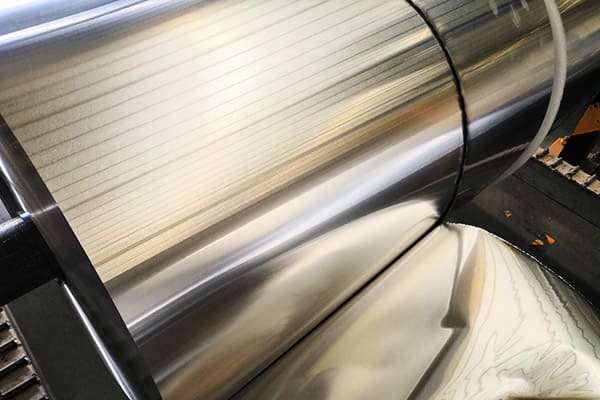
Huawei 6.5 Micron Aluminum Foil Jumbo Roll
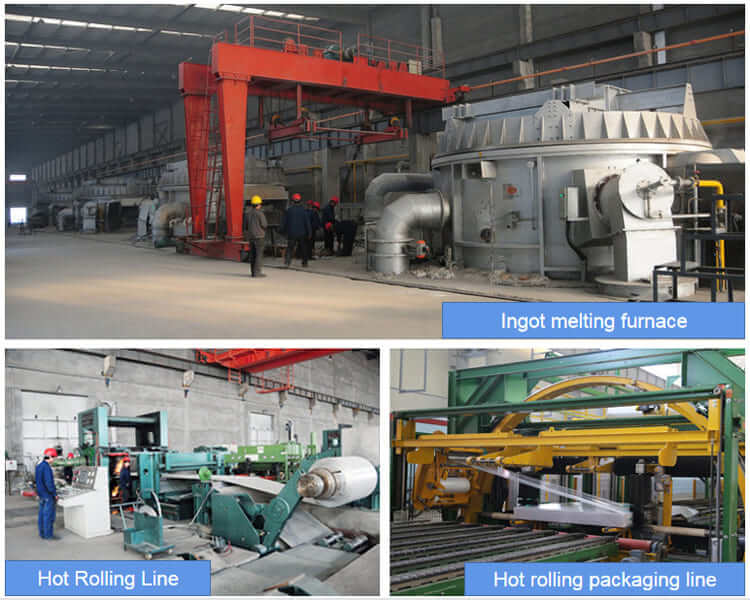
Manufacturing Process: From Ingot to 6.5 μm Foil
A robust manufacturing process is essential to produce 6.5 μm foil that meets the tight tolerances demanded by modern packaging.
The primary stages include slab casting, hot rolling, te to'eto'e, Te mau mana'o tauturu no te, edge trimming, and final inspection.
Each stage contributes to the final foil thickness, flatness, surface finish, and performance in lamination and sealing.
Ingot casting and billet preparation
- Aluminum billets are cast to form ingots with controlled composition to ensure consistent behavior through rolling.
- Impurities and impurities distribution are tightly controlled to maintain surface quality and prevent defect formation during thinning.
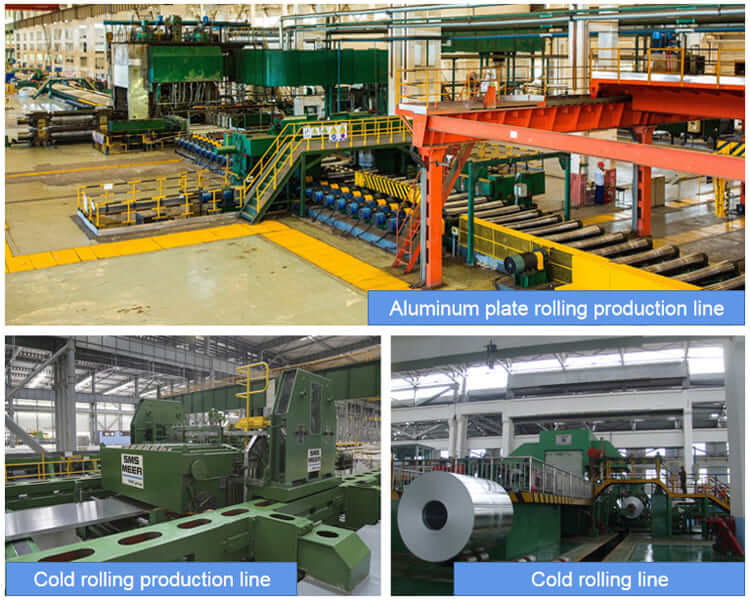
Hot rolling and cold rolling stages
- Hot rolling reduces the billet to a rough sheet, setting the stage for the next passes. The temperatures in hot rolling are optimized to promote formability and minimize work-hardening.
- Cold rolling reduces the sheet to the target thickness. Achieving a target of 6.5 μm demands precise serial reductions, tight tension control, and thermal conditioning to avoid rolled-in stresses and thickness variations.
- Inter-pass annealing can be applied to control crystallinity and prevent excessive work hardening, ensuring the foil remains ductile enough for downstream processing without cracking.
Annealing and tempering
- Annealing stabilizes the film’s microstructure, relieving residual stresses from rolling and improving surface finish.
- For packaging foils, annealing is a critical step to attain the appropriate softness (O temper) or to facilitate subsequent lamination steps.
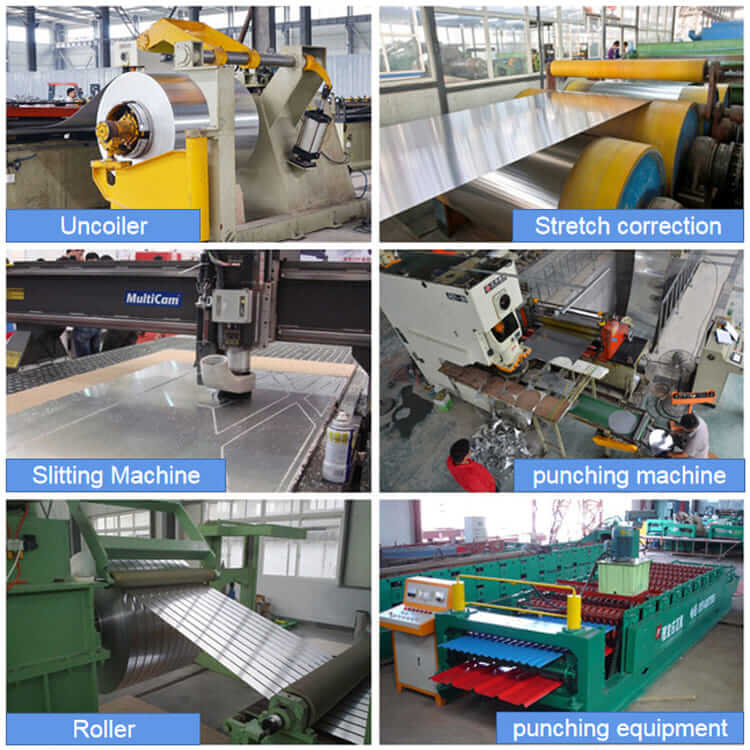
Edge trimming and inspection
- Edge trimming ensures clean, straight margins for die-cutting and lamination.
- Non-destructive testing (NDT) and dimensional metrology assess thickness uniformity, surface defects, and flatness.
- Pinhole testing, roughness measurement, and gloss quantification help guarantee that the foil meets required quality standards before it enters lamination lines.
Quality assurance and certification
- Quality systems (e.g., ISO 9001) govern the manufacturing process to capture process capability indices and maintain consistent product specs.
- Some suppliers also pursue ISO 14001 for environmental management and additional consumer safety certifications to address food-contact compliance.
Lamination and Packaging Configurations for 6.5 μm Foil
In flexible packaging, the foil is rarely used alone. It is typically integrated into multi-layer laminates that combine barrier properties, mechanical strength, sealing performance, printability, and recyclability goals.
Here we explore common laminates, seal technologies, and printing considerations relevant to 6.5 μm foil.
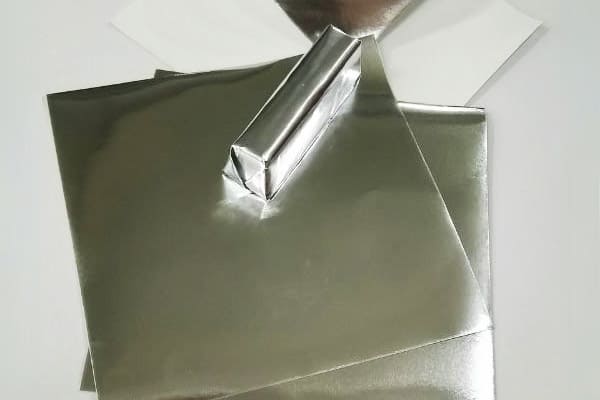
Aluminum Paper Composite Aluminum Foil
Laminate architecture: common configurations
- Foil-based laminates for dry foods, snacks, and confectionery:
- Outer layer: PET (polyethylene terephthalate) or PE (polyethylene)
- Adhesive layer: EVA (ethylene-vinyl acetate) or hot-mused adhesives
- Core: 6.5 μm aluminum foil
- Inner layer: Sealant film (e.g., polyolefin-based sealant layer) or EVA for heat sealing
- Aesthetic and premium packaging:
- Aluminum foil with bright finish, combined with metallic inks or brand-printed designs on PET or paper substrates (foil-laminated cosmetic packaging is another example, though outside typical snack packaging).
- Barrier-heavy laminates for moisture-sensitive products:
- The foil acts as a barrier, while additional barrier layers (e.g., polyvinylidene chloride? Not common in modern packaging due to safety concerns; instead, high-barrier polymers like EVOH or polyamide (PA) are used in combination with laminates) contribute to moisture resistance.
In practice, te 6.5 μm foil serves as the core barrier element, with the laminate design tuned to the product’s shelf-life, temperature exposure, and consumer handling.
Sealing and heat-seal performance
- Heat-seal strength is a key performance metric. The seal must be strong enough to handle automated packaging line speeds, yet not so strong that tearing or material rupture happens at the seal seam.
- The foil’s surface finish and compatibility with the sealant layer influence heat-seal integrity. Bright foils may require different sealant formulations compared to dull finishes.
- Temperature range: For snacks and confectionery applications, seal temperature windows are typically in a range appropriate for the sealant layer, and the foil’s thermal response should be compatible with the lamination film and process.
Printing on foil or film laminates
- Printing on the outer layer of the laminate is common for brand presentation. For 6.5 μm foil laminates, printability is influenced by the surface finish of the foil and the chosen adhesive system.
- Surface treatment or corona treatment of PET or other outer film layers can improve ink adhesion and color vibrancy.
- Ink migration and color stability are considerations when lamination tears and potential pinholes exist in thin foils. Proper lamination and plating (if using metalized designs) can reduce issues.
Recyclability and sustainability considerations
- A practical reality of laminate packaging is that the foil, adhesives, and polymer layers complicate recyclability. Many manufacturers aim to design peelable laminates or to select adhesives that facilitate separation during recycling streams.
- Some packaging solutions pursue mono-material laminates (e.g., PET or PE-based outer layers with a separate foil layer) and advanced mechanical recycling, though this often comes at a performance trade-off.
- The choice of lamination and adhesive strategy should align with the company’s sustainability goals, regulatory requirements, and end-of-life strategies for packaging.
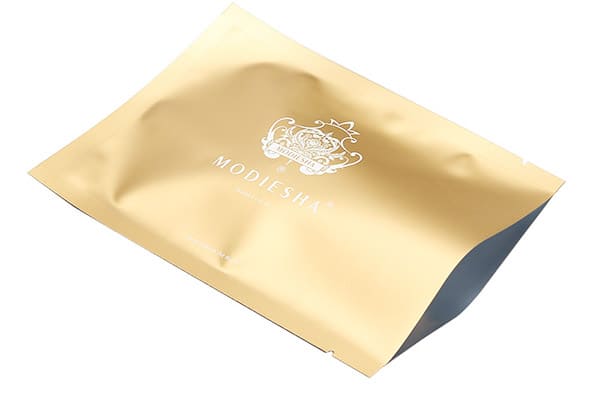
Flexible Packaging Aluminum Foil
Te mau faaohiparaa: Where 6.5 μm Aluminum Foil Fits Best
6.5 μm aluminum foil is particularly well-suited to specific product categories where the balance of barrier, seal integrity, weight savings, and cost is favorable.
Food and snack packaging
- Dry snacks (chips, nuts, popcorn): The combination of barrier and lightweight packaging helps maintain product quality, while the laminate can be optimized for crispness and aroma retention.
- Confectionery and chocolates: The aesthetic appeal of bright or matte foil, combined with high-quality printing, can deliver premium shelf presence with the weight and cost advantages of a thinner foil.
- Coffee and tea: For ground coffee and tea products, 6.5 μm foil in a high-barrier laminate can help keep moisture and aroma intact.
Pet foods and pet treats
- Lightweight packaging with good barrier properties helps preserve shelf stability and reduce packaging weight during distribution.
Pharmaceuticals and medical devices
- Certain primary packaging formats for pharmaceuticals require strict moisture and oxygen barriers in compact forms. 6.5 μm foil, when used in appropriate laminate systems, can meet the protective needs of specific products with tighter packaging formats.
Other consumer packaging
- Household products, detergents, and non-food items may use 6.5 μm foil laminates for labels, sachets, or single-dose packaging, particularly where speed-to-market and cost are critical.
In practice, the best fit for 6.5 μm foil occurs in scenarios where the brand wants a lighter-weight solution without compromising essential barrier properties, and where the laminate engineering can compensate for the thin foil’s intrinsic vulnerabilities.
Comparative Analysis: 6.5 μm vs Other Thicknesses
To make informed decisions, it helps to compare 6.5 μm foil with nearby thicknesses, mai te 5 μm, 7 μm, 9 μm, e 12 μm. The comparisons below focus on barrier performance, weight, printing and sealing implications, and cost considerations.
- Me'ume'u: 5 μm
- Barrier: Moderate; relatively higher OTR/WVTR than thicker foils, but improved when paired with high-barrier laminates.
- Te faito teiaha: Lower than 6.5 μm by approximately 15-23%.
- Sealing: Often more challenging due to higher stretch sensitivity; may require specialized sealants and equipment calibration.
- Printability: Mai te 6.5 μm if surface finish is compatible; printing quality can depend on surface roughness and ink system.
- Cost: Typically lower raw foil cost, offset by laminate design requirements.
- Me'ume'u: 6.5 μm
- Barrier: Good balance, especially with modern laminates; commonly used thickness in snack and confectionery markets.
- Te faito teiaha: No ni'a i te 28% lighter than 9 μm foil (rough estimate; exact value depends on density and thickness difference).
- Sealing: Favorable with appropriate sealants; broad compatibility with standard form-fill-seal equipment.
- Printability: Strong for premium packaging with proper surface finish.
- Cost: Moderate; savings versus thicker foils often outweigh incremental lamination cost.
- Me'ume'u: 7 μm
- Barrier: Slightly improved relative to 6.5 μm; depends heavily on laminate design.
- Te faito teiaha: Marginally heavier than 6.5 μm, offering a middle-ground choice.
- Sealing: Good compromise; compatible with many standard sealants.
- Printability: Mai te 6.5 μm with appropriate surface finish.
- Me'ume'u: 9 μm
- Barrier: Enhanced mechanical barrier; easier pinhole-free performance in some laminate designs.
- Te faito teiaha: Significant increase over 6.5 μm (~38% more than 6.5 μm for the same area).
- Sealing: Robust seal strength; often used where high mechanical integrity is required.
- Printability: Excellent if surface finish is suitable; more forgiving in some print processes.
- Me'ume'u: 12 μm
- Barrier: Very strong barrier in many laminates; often used for high-risk moisture environments or longer shelf life.
- Te faito teiaha: Substantial weight penalty; roughly 64% heavier than 6.5 μm for equivalent area.
- Sealing: Very strong seal; widely compatible with high-temperature sealants.
- Printability: High, but the overall laminate cost and thickness may offset the benefit.
Takeaways:
– The “best” thickness depends on product sensitivity, shelf life, and packaging line capabilities. For many modern snacks and confectionery lines, 6.5 μm offers a compelling combination of barrier performance, weight savings, and processing compatibility when paired with well-designed laminates.
– If maximum moisture or oxygen resistance is required in a harsh environment, stepping up to 7–9 μm or using a specialized laminate with high-barrier polymer layers can achieve the desired performance while still benefiting from aluminum foil’s barrier and formability.
Supplier Profile: Huawei Aluminum
Huawei Aluminum is a key player in the global aluminum foil market, offering a broad portfolio aligned with flexible packaging needs.
This section provides a concise profile to help buyers understand the supplier landscape and what Huawei Aluminum brings to the table.
Note that product availability, specifications, and certifications can vary by facility and region, and direct engagement with the supplier is essential for the most current offerings.
Company overview
- Huawei Aluminum specializes in aluminum foil and related packaging solutions, with a focus on packaging foils, household foils, and laminated packaging materials.
- The company emphasizes product integrity, quality control, and customer-centric service, with a track record in supplying film foils and laminate-compatible foil to global customers.
- Huawei Aluminum’s product families typically include:
- Packaging foils (various thicknesses suitable for lamination)
- Household and commercial foils
- Foils with high puncture resistance, bright/dull finishes, and tailored surface properties
- Coated and laminated foil options compatible with common adhesives and sealants
Capabilities and strengths
- Comprehensive thickness range: From ultra-thin packaging foils to thicker foil products designed for multi-layer laminates.
- Te peu tumu: Ability to tailor alloy choice, temper, surface finish, and coating to match customer specifications and process requirements.
- Quality management: Investment in rigorous quality systems, inspection protocols, and customer-focused QA to ensure consistent performance across production lots.
- Global reach: Aimed at supporting international customers with supply chain reliability, technical support, and after-sales service.
How Huawei Aluminum supports 6.5 μm foil projects
- Alloy and temper options: Availability of 6.5 μm foils in appropriate alloys and temper for packaging, with potential customization in surface finish to optimize lamination and printing.
- Lamination compatibility: Knowledgeable about integrating foils with common lamination layers (PET/PE, adhesives, and sealants), helping customers design robust multi-layer structures.
- Testing and validation: Support for material testing and pilot runs to validate barrier performance, seal strength, and printability within the customer’s packaging line.
- Regulatory compliance: Guidance on food-contact compliance and regulatory considerations relevant to packaging materials, including migration and safety concerns.
Performance Metrics, Testing, and Quality Assurance
To ensure the reliability of 6.5 μm aluminum foil in packaging applications, robust testing and QA practices are essential. Here are the principal metrics and testing approaches that brands and converters commonly use.
Key performance metrics
- Thickness uniformity and tolerance
- Surface finish quality (gloss, roughness)
- Pinhole density and distribution
- Surface contamination (adhesive compatibility, oxide layer integrity)
- Tensile properties and elongation under standard test conditions
- Heat seal strength and seal integrity across the intended laminate
- Barrier indicators within the final laminate (ease of lamination, WVTR/OTR when relevant)
Common test methods
- Thickness measurement: Non-contact ultrasonic or micrometry-based measurement across the foil surface, with multiple checks per roll.
- Pinhole testing: Helium or air-based testing, often with automated camera-based detection for pinholes and defect mapping.
- Surface finish assessment: Gloss measurement and roughness profiling to anticipate printability and adhesive wet-out performance.
- Tensile testing: ASTM E8/E8M or ISO equivalents for thin foils to quantify tensile strength and elongation.
- Seal strength testing: Heat-seal strength tests (e.g., using peel tests) across a range of sealing temperatures and dwell times to capture process sensitivity.
- Barrier testing in laminates: WVTR and OTR testing on the final laminate under defined conditions (temperature, humidity) to validate performance targets.
- Food-contact compliance: Migration testing and regulatory conformity to food-contact standards (e.g., EU/EFSA, FDA, GB standards) based on the intended market.
Process control and supplier collaboration
- Statistical process control (SPC) is used to monitor thickness, surface defects, and pinhole rates across production lots.
- Quality agreement with suppliers (e.g., Huawei Aluminum) typically covers sampling plans, acceptance criteria, and non-conformance handling.
- Pilot runs and scale-up testing help ensure that 6.5 μm foil performs as expected in the customer’s lamination line, with precise sealant and printing conditions.
FAQs About 6.5 Micron Aluminum Foil Flexible Packaging
Q1: What does 6.5 μm aluminum foil mean in packaging?
– It refers to the thickness of the aluminum foil used as part of a laminated structure in flexible packaging. Ua haapii mai te 6.5 μm thickness contributes to barrier and strength characteristics while enabling weight savings.
Q2: How does 6.5 μm foil compare to 7 μm or 5 μm foil?
– 6.5 μm is typically a middle ground between the lighter 5 μm and the slightly thicker 7 μm. The choice depends on required barrier performance, seal strength, and lamination design. Ua haapii mai te 6.5 μm option can offer a balance of barrier integrity, printability, and processing tolerance when paired with suitable laminates.
Q3: Which alloys are commonly used for 6.5 μm packaging foil?
– Common options include 8011-O and 1100-O, chosen for readability, ductility, and compatibility with laminate structures. The selection depends on required barrier properties, food-contact compliance, and processing compatibility.
Q4: E nehenehe 6.5 μm foil be printed on?
– E, with appropriate surface finish and primer/adhesive systems, printing on the outer laminate layer yields vibrant brand designs. The foil’s surface finish and the lamination sequence play a significant role in print quality.
Q5: How does 6.5 μm foil affect sustainability?
– The lighter weight and reduced material consumption can contribute to lower packaging material usage. Tera râ,, the overall sustainability outcome depends on the laminate design, recycling pathways, and end-of-life management. Laminates with easier recyclability or peelable layers are a growing area of focus.
Q6: What safety certifications are typically required for food-contact packaging foil?
– Food-contact compliance varies by market but generally involves compliance with relevant regulatory frameworks (e.g., FDA in the US, EFSA in the EU for migration and material safety) and adherence to supplier QA standards such as ISO 9001. Huawei Aluminum and other suppliers will typically provide material declarations and test data to support compliance.
Q7: How should I specify 6.5 μm foil for a project?
– Define the intended product, packaging format, laminate architecture, required barrier performance, seal strength criteria, and any printing needs. Request pilot runs, mechanical and barrier testing data, and documentation on food-contact compliance and recycling considerations. Engage with the supplier to tailor the foil alloy, temper, and surface finish to the project.
Q8: What are common challenges with 6.5 μm foil?
– Potential challenges include pinhole defects, laminate delamination if adhesive compatibility is not properly vetted, seal integrity variability, and handling sensitivity in converting equipment. Mitigation involves rigorous supplier qualification, pilot testing, and process tuning on lamination lines.
Q9: Ua 6.5 μm foil appropriate for high-speed packaging lines?
– E, provided the laminate design and sealing system are tuned for the foil’s properties. Working with the foil supplier and laminator to optimize seal temperatures, dwell times, and lamination speed is critical for reliable performance.
Conclusion
6.5 micron aluminum foil flexible packaging, offering a favorable balance of barrier performance, weight reduction, and processing compatibility when integrated into the right laminate architecture.
This thickness, combined with careful alloy selection, temper, surface finish, and a well- designed lamination stack, can deliver packaging that meets modern brand expectations for performance and sustainability.
As you move forward with 6.5 μm aluminum foil flexible packaging, leverage pilot testing, supplier technical support, and a holistic view of the entire packaging system—from foil and laminate to sealing and end-of-life outcomes—to deliver packaging that meets performance, cost, and sustainability objectives.
If you’re evaluating suppliers for this thickness of foil, consider requesting from Huawei Aluminum: a detailed specification sheet for 6.5 μm packaging foil (including alloy, temper, surface finish options), thickness tolerance data, representative sample laminates, seal strength data across your target laminate system, and any relevant regulatory/compliance documentation.
A structured supplier comparison that includes technical data, lead times, pricing, and after-sales support will help you select the best partner for your packaging program.
Share with PDF: Download




A vaiiho i te hoê pahonoraa