Cast-Rolled vs Hot-Rolled Aluminum Sheets: Unveiling the Key Differences and Best Uses
Introduction
The aluminum industry presents manufacturers and engineers with critical decisions when selecting materials for their projects. Two primary processing methods—cast-rolling vs hot-rolling aluminum sheets with distinctly different properties, performance characteristics, and applications.
Understanding these differences empowers professionals to optimize their material selection, reduce costs, and enhance product quality.
This comprehensive guide explores the fundamental distinctions between cast-rolled and hot-rolled aluminum sheets, examines their manufacturing processes, compares their mechanical properties, and identifies ideal applications for each.
Whether you work in aerospace, automotive, packaging, or general manufacturing, this article provides the technical insights you need to make informed decisions.

Processing Methods: Cast-rolled vs hot-rolled aluminum sheets
The Significance of Processing Methods
Processing methods fundamentally shape aluminum’s final properties.
The choice between cast-rolled and hot-rolled aluminum sheets affects tensile strength, surface quality, elongation, fatigue resistance, and formability.
These differences directly impact product performance, manufacturing efficiency, and overall project costs.
Manufacturers select processing methods based on specific application requirements, budget constraints, and performance specifications.
The wrong selection can lead to product failures, increased waste, or unnecessary expenses.
Therefore, understanding these processes becomes essential for anyone involved in material procurement or production planning.
How Processing Influences Final Properties
The thermal history, deformation rates, and cooling schedules during processing fundamentally alter aluminum’s microstructure.
Different processing conditions create variations in grain size, precipitate distribution, and dislocation density.
These microstructural features directly determine mechanical properties, corrosion resistance, and workability.
Cast-Rolled Aluminum Sheets: Process and Properties
The Cast-Rolling Process Explained
Cast-rolling represents a direct casting and rolling method that bypasses traditional ingot casting.
The process begins with molten aluminum, which is poured directly onto the surface of large, rotating rolls.
These rolls immediately shape the molten metal while it cools and solidifies.
Key steps in the cast-rolling process:
- Molten aluminum preparation (typically at 700-750°C)
- Direct casting onto rotating rolls
- Simultaneous cooling and deformation
- Immediate solidification to form thin strips
- Coiling of finished sheets
- Optional annealing treatments
This integrated approach eliminates the traditional ingot casting step, reducing energy consumption and production time.
The cast-rolling method produces aluminum sheets with thickness ranging from 2mm to 8mm in a single operation.
Microstructural Characteristics of Cast-Rolled Aluminum
Cast-rolled aluminum exhibits distinctive microstructural features that influence its performance.
The rapid cooling rate during cast-rolling creates finer grain structures compared to traditional ingot casting.
This finer grain size generally improves mechanical properties and surface quality.
Characteristic features of cast-rolled aluminum:
- Fine, uniform grain structure (typically 50-150 micrometers)
- Minimal segregation (element distribution variation)
- Lower impurity concentration in surface layers
- Reduced cast defects compared to ingot-cast material
- Better surface finish directly from the rolling process
- More uniform property distribution throughout the sheet thickness
The homogeneous nature of cast-rolled aluminum makes it particularly suitable for applications requiring consistent properties across the material.

Mechanical Properties of Cast-Rolled Aluminum Sheets
Cast-rolled aluminum sheets demonstrate specific mechanical characteristics that make them valuable for particular applications:
| Property | Cast-Rolled Aluminum | Typical Range |
|---|---|---|
| Tensile Strength (MPa) | 90-180 | Depends on alloy |
| Yield Strength (MPa) | 40-170 | Alloy-dependent |
| Elongation (%) | 1-15 | Varies by alloy |
| Hardness (HV) | 30-90 | Processing-dependent |
| Surface Roughness (Ra, μm) | 1.6-3.2 | Excellent quality |
| Thickness Tolerance | ±0.05-0.15mm | Tight control |
These properties make cast-rolled aluminum ideal for applications where surface quality and dimensional accuracy matter significantly.
Hot-Rolled Aluminum Sheets: Process and Characteristics
The Hot-Rolling Process Detailed
Hot-rolling processes aluminum ingots that have already undergone casting and scalping (surface removal).
The heated ingot enters the rolling mill at elevated temperatures, typically 400-500°C, where multiple rolling passes gradually reduce thickness.
The hot-rolling sequence involves:
- Ingot heating to optimal rolling temperature (400-500°C)
- Surface scalping to remove surface defects
- Primary (rough) rolling with heavy reductions
- Intermediate rolling with moderate reductions
- Finish rolling to achieve target thickness
- Cooling after final rolling
- Coiling and potential heat treatment
Hot-rolling allows manufacturers to produce larger quantities and thicker sheets compared to cast-rolling.
The process handles ingots up to several tons, producing sheets with thicknesses ranging from 3mm to 12mm or greater.
Microstructural Development During Hot-Rolling
The hot-rolling process creates a different microstructural evolution compared to cast-rolling.
The combination of high temperature deformation and dynamic recrystallization produces coarser grain structures in the final product.
Microstructural characteristics of hot-rolled aluminum:
- Coarser grain structure (typically 150-400 micrometers)
- Variable grain size distribution
- Residual segregation patterns from ingot casting
- Surface oxidation and scale formation
- Anisotropic properties (direction-dependent characteristics)
- Lower surface quality requiring additional cleaning
The coarser grain structure influences mechanical properties, requiring engineers to account for these differences in their designs.
Mechanical Properties of Hot-Rolled Aluminum Sheets
Hot-rolled aluminum exhibits mechanical properties distinct from cast-rolled material:
| Property | Hot-Rolled Aluminum | Typical Range |
|---|---|---|
| Tensile Strength (MPa) | 70-150 | Alloy and temper dependent |
| Yield Strength (MPa) | 30-140 | Varies significantly |
| Elongation (%) | 2-20 | Higher than cast-rolled |
| Hardness (HV) | 25-80 | Generally softer |
| Surface Roughness (Ra, μm) | 3.2-6.4 | Requires finishing |
| Thickness Tolerance | ±0.2-0.5mm | Looser than cast-rolled |
The typically lower yield strength but higher elongation of hot-rolled aluminum makes it more suitable for applications requiring greater deformability.

Detailed Comparison: Cast-Rolled vs Hot-Rolled Aluminum Sheet
Surface Quality Comparison
Surface quality represents one of the most obvious differences between these two processes.
Cast-rolled aluminum advantages:
– Superior surface finish (Ra: 1.6-3.2 μm vs. 3.2-6.4 μm)
– Minimal surface defects directly from the rolling process
– Excellent cosmetic appearance without additional surface treatment
– Ideal for applications requiring aesthetic considerations
– Reduced cleaning and finishing costs
Hot-rolled aluminum characteristics:
– Surface oxidation and mill scale formation
– Visible surface irregularities and defects
– Requires descaling and surface finishing for cosmetic applications
– Acceptable for structural applications where appearance matters less
– Additional finishing operations increase production cost
For applications like consumer electronics, architectural panels, or decorative components, cast-rolled aluminum’s superior surface quality provides significant advantages.
Dimensional Accuracy and Tolerances
Dimensional precision directly impacts manufacturing efficiency and part quality.
Cast-rolled aluminum tolerances:
– Thickness tolerance: ±0.05-0.15mm
– Width tolerance: ±2-5mm
– Flatness: ±2-5mm per meter
– Minimal variation between coils
Hot-rolled aluminum tolerances:
– Thickness tolerance: ±0.2-0.5mm
– Width tolerance: ±5-10mm
– Flatness: ±5-10mm per meter
– Greater variation between coils
Tighter tolerances from cast-rolled aluminum reduce machining requirements and waste, lowering overall production costs for precision applications.
However, the cost of achieving these tolerances must be justified by application requirements.
Mechanical Property Variations
While both materials can achieve similar strength levels through appropriate alloy selection and heat treatment, their property development differs.
Cast-rolled advantages:
– More uniform properties throughout the sheet
– Better consistency between coils
– Finer grain structure improves fatigue resistance
– Superior surface quality reduces stress concentration points
– Predictable anisotropy (less directional property variation)
Hot-rolled advantages:
– Greater elongation and ductility in as-rolled condition
– Better formability for deep drawing operations
– Lower production temperatures reduce energy input
– Capable of producing thicker sections
– Less expensive material cost
Engineers must evaluate whether uniformity or formability better serves their specific application requirements.
Production Capacity and Economics
Production capacity influences material availability and pricing.
Cast-rolling economics:
– Lower production rates (typically 5-10 tons per hour)
– Smaller coil weights (typically 1-5 tons)
– Higher production cost per ton
– Better suited for specialty alloys and thin sheets
– Faster time to market for design changes
Hot-rolling economics:
– Higher production rates (typically 15-30 tons per hour)
– Larger coil weights (typically 5-20 tons)
– Lower production cost per ton
– Better suited for high-volume applications
– Established supply chains and inventory availability
For high-volume projects with less stringent specifications, hot-rolled aluminum’s lower cost becomes significant.
Conversely, specialty applications justify cast-rolled aluminum’s premium pricing through superior properties and reduced finishing requirements.
Applications and Best Uses
Ideal Applications for Cast-Rolled Aluminum
Cast-rolled aluminum excels in specific application categories where its superior properties justify higher costs.
Consumer electronics and appliances:
– Laptop and tablet casings requiring tight tolerances and excellent surface finish
– Smartphone components with demanding dimensional accuracy
– Refrigerator and air conditioning components
– High-end kitchen appliance bodies
– Display panel frames
Packaging industry:
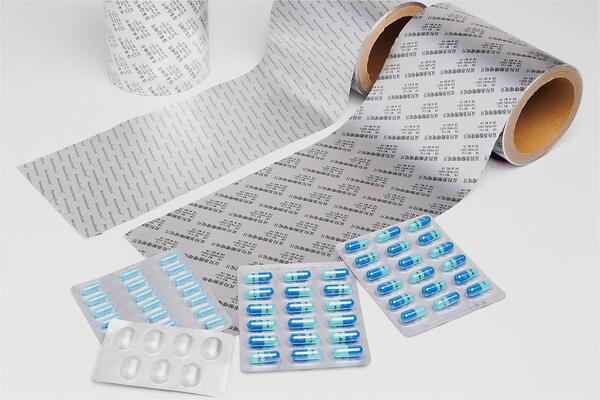
– Pharmaceutical blister pack foils
– Food packaging materials requiring barrier properties
– Laminated composite packaging
– Flexible packaging with embossing requirements
– Beverage can stock with superior print surface
Automotive components:
– Transmission heat shields requiring dimensional precision
– Automotive trim components with visible surfaces
– Engine bay components with tight tolerances
– Structural reinforcements requiring consistent properties
– Premium vehicle body panels
Aerospace and defense:
– Aircraft fuselage and wing components
– Helicopter rotor blades
– Spacecraft structural components
– Military vehicle armor plating
– Defense system housings
Electrical and electronics:
– Power distribution components
– Heat sink materials requiring uniform thermal properties
– Electromagnetic shielding enclosures
– Power electronics packaging
– Transformer components
Ideal Applications for Hot-Rolled Aluminum
Hot-rolled aluminum serves applications where formability, cost, and availability outweigh precision requirements.
Structural and construction applications:
– Building frameworks and columns
– Bridge structural components
– Stadium and arena structures
– Roof and floor decking systems
– Wall cladding and external panels
Heavy equipment and machinery:
– Industrial equipment frames
– Conveyor system components
– Heavy machinery housings
– Forklift structures
– Mining equipment frames
Transportation infrastructure:
– Railway wagon bodies
– Truck bodies and trailers
– Bus bodies and frames
– Marine vessel structures
– Cargo container components
General manufacturing:
– Welded assemblies and structures
– Bent and formed components
– Riveted structural assemblies
– Hydraulic and pneumatic cylinders
– Heavy-duty equipment platforms
Marine and maritime applications:
– Boat hulls and superstructures
– Offshore platform components
– Ship structural elements
– Marine equipment housings
– Saltwater-resistant architectural components
About Huawei Aluminum: A Leading Industry Supplier
Company Overview and Capabilities
Huawei Aluminum represents a premier supplier of high-quality aluminum sheets, combining decades of manufacturing expertise with cutting-edge production technology.
The company operates state-of-the-art facilities producing both cast-rolled and hot-rolled aluminum sheets to serve diverse global markets.
The company’s commitment to quality, innovation, and customer service positions it as a trusted partner for manufacturers requiring reliable aluminum supply.
Huawei Aluminum maintains strict quality control processes ensuring consistent material properties and dimensional accuracy across all production runs.
Product Range and Specialization
Huawei Aluminum offers comprehensive aluminum solutions including:
- Cast-rolled aluminum sheets in various alloys and tempers
- Hot-rolled aluminum sheets for structural and industrial applications
- Custom alloy development for specialized requirements
- Surface treatment options including anodizing and coating
- Precision cutting and finishing services
- Technical consultation for material selection and optimization
The company produces aluminum sheets meeting international standards including ASTM, EN, GB, and JIS specifications.
This global standard compliance ensures compatibility with global supply chains and manufacturing requirements.
Quality Assurance and Certifications
Huawei Aluminum maintains rigorous quality management systems ensuring material consistency and performance.
The company holds multiple international certifications including ISO 9001:2015 quality management certification and specialized aerospace and automotive certifications.
Regular testing and inspection procedures verify material properties including tensile strength, yield strength, elongation, hardness, and surface quality.
The company maintains detailed traceability documentation for all products, enabling customers to verify material properties and manufacturing history.
Customer Service and Technical Support
Huawei Aluminum provides comprehensive support services helping customers optimize their material selection and manufacturing processes.
The company offers technical consultation, material testing services, and customized solutions addressing specific application requirements.
Professional engineers collaborate with customers to evaluate performance requirements, recommend appropriate materials and tempers, and provide guidance on processing parameters.
This consultative approach ensures customers receive materials perfectly matched to their specific applications.
Alloy Considerations Across Processing Methods
Common Alloys in Cast-Rolled Production
Certain aluminum alloys particularly benefit from cast-rolling processes:
1000 Series (Commercially Pure Aluminum):
– Excellent corrosion resistance
– Superior electrical conductivity
– Ideal for electrical components and foil
– Limited mechanical strength
– Highly formable
3000 Series (Aluminum-Manganese):
– Improved strength over pure aluminum
– Good corrosion resistance
– Excellent formability
– Common in packaging applications
– Suitable for food service equipment
5000 Series (Aluminum-Magnesium):
– Higher strength than 3000 series
– Excellent marine corrosion resistance
– Good weldability
– Applications in marine and coastal structures
– Better fatigue resistance
8000 Series (Aluminum-Lithium, Aluminum-Tin):
– Specialized automotive and aerospace applications
– Enhanced strength-to-weight ratios
– Superior fatigue properties
– Limited availability
– Premium pricing
Common Alloys in Hot-Rolled Production
Hot-rolling produces certain alloys more efficiently:
2000 Series (Aluminum-Copper):
– High strength for structural applications
– Excellent machinability
– Reduced corrosion resistance (requires protective coatings)
– Aerospace and military applications
– Complex heat treatment requirements
5000 Series variations:
– Larger structural sections readily available
– Marine and construction applications
– Excellent weldability
– Cost-effective high-volume production
– Superior strength retention at elevated temperatures
6000 Series (Aluminum-Silicon-Magnesium):
– Excellent extrudability (though often extruded rather than rolled)
– Good formability in hot-rolled form
– Automotive and architectural applications
– Moderate strength properties
– Improved corrosion resistance
7000 Series (Aluminum-Zinc):
– Highest strength aluminum alloys
– Aerospace and defense applications
– Complex thermal processing required
– Excellent fatigue properties
– Premium cost justifies use in critical applications
Process Selection Decision Framework
Factors Influencing Material Selection
1. Application Requirements:
– Load-bearing capacity and strength specifications
– Environmental exposure and corrosion considerations
– Temperature range and thermal cycling
– Fatigue life requirements
– Aesthetic appearance demands
2. Manufacturing Process Requirements:
– Formability and bending capabilities
– Weldability and joining methods
– Machinability for precision components
– Surface treatment compatibility
– Stress relief and heat treatment needs
3. Economic Considerations:
– Material cost per unit
– Production volume and tooling amortization
– Finishing and processing costs
– Scrap and waste management
– Inventory carrying costs
4. Supply Chain Factors:
– Material availability and lead times
– Supplier reliability and consistency
– Quality control and traceability
– Geographic proximity to manufacturing
– Minimum order quantities
Decision Matrix for Process Selection
Use this systematic approach to evaluate cast-rolled vs. hot-rolled aluminum:
| Selection Criteria | Cast-Rolled | Hot-Rolled | Evaluation Method |
|---|---|---|---|
| Dimensional Tolerance | Tight (±0.05-0.15mm) | Loose (±0.2-0.5mm) | Compare product specs |
| Surface Quality | Excellent | Good (requires finishing) | Visual inspection |
| Production Volume | Medium (specialty products) | High (commodity) | Supplier capability |
| Formability | Good | Excellent | Testing requirements |
| Cost | Higher per unit | Lower per unit | Price quotes |
| Lead Time | Longer (specialty) | Shorter (inventory) | Availability check |
| Mechanical Properties |
Share with PDF: Download

Leave a Reply